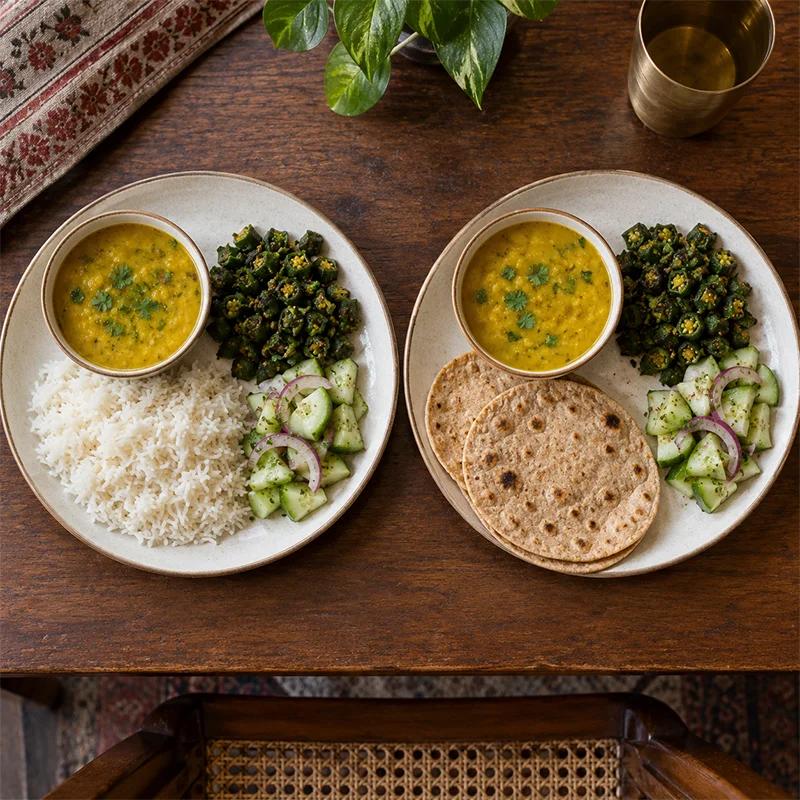

Here is all of it, in the order you would use it at dinner tonight.
Rice or roti for diabetes by the numbers: glycemic index of rice and roti
The glycemic index (GI) scores how fast a food raises blood sugar. Pure glucose is 100. 55 or less is low. 70 or more is high. From the International Tables of GI, 2008:
Food | GI (glucose = 100) | Band |
|---|---|---|
White rice, boiled (average) | 73 | High |
Brown rice, boiled | 68 | Medium |
Wheat roti | 62 | Medium |
Chapati | 52 | Low |
Dal (lentils) | 32 | Low |
Barley (jau) | 28 | Low |
Chana (chickpeas) | 28 | Low |
The tables list "chapatti" (52) and "wheat roti" (62) as separate entries. The difference comes from the flour and the test batches. The tables also note that some rice varieties have a lower GI.
So on rice or roti for diabetes, roti wins the head-to-head. But look at the bottom of the table. A jau roti and a katori of dal are in a different league from both.
The diabetic plate method: the rule that beats "rice or roti"
A plate that is mostly rice or roti → Half vegetables, a quarter dal, a quarter grain
The diabetes plate method is used by the American Diabetes Association. Indian diabetes doctor Dr V Mohan backs it for India. Half the plate: vegetables (not potato). One quarter: protein such as dal, chana or paneer. One quarter: grain. That grain can be rice in the South and East, and roti in the North and West. Stanford's Indian plate guide suggests about one small fist of rice per meal as a start.
So before asking rice or roti for diabetes, ask how much of the plate it covers. A fist of rice beside a full katori of dal and a heap of sabzi is a different meal from a plate of rice with a spoon of dal. Fix the plate first. Then the grain.
Cooled rice and resistant starch: the fridge trick
Rice straight from the cooker → Rice cooked earlier, cooled 24 hours in the fridge, reheated
In a trial of 15 healthy adults, white rice cooled for 24 hours in the fridge and then reheated had more resistant starch (1.65 g per 100 g, against 0.64 g in fresh rice). It gave a clearly lower blood sugar rise than freshly cooked rice. Rice cooled 10 hours at room temperature sat in between.
Read this carefully: it is one small study in people without diabetes. And the rice was still rice. Use the trick for the rice you were already going to eat. Do not use it to eat more. Reheat cooled rice properly. And cool it in the fridge, not on the counter overnight.
Old rice for diabetes: what Charaka said
New-crop rice → Aged (purana) rice, cooked with moong soup
- Charaka lists "freshly harvested grains" among the causes of prameha, the old name for sugar disease (Chikitsa chapter 6, verse 4).
- For prameha patients, he suggests "old shali rice, cooked and mixed with moong soup" (verses 18–24). He says the patient "should be given old rice, cooked and mixed with the tasty soup" (verse 36).
Notice what Charaka pairs the rice with: moong soup. That is the plate method, written centuries earlier. An honest note: we found no trial comparing old and new rice for blood sugar. So the old-rice rule rests on Charaka. Ask your grocer for aged rice.
Jau roti for diabetes: the roti that beats roti
Wheat roti (GI 52–62) → Jau atta mixed 1:1 with wheat, working up to more jau
Barley's GI of 28 is less than half of white rice's. Its soluble fibre, beta-glucan, also has a US FDA heart-health claim at 3 g a day. That matters, because diabetes nearly doubles heart disease risk (see diabetes and cholesterol).
Barley is the grain Charaka names most for prameha. Barley dishes in many forms (Chikitsa chapter 6, verses 18–24). And "people who regularly eat roasted barley, dry grain flour, moong and amla do not get prameha" (verses 46–48).
Rice or roti for diabetes: what to do tonight
- Fill half the plate with sabzi and salad first. Then a quarter with dal, chana or paneer. Only then add the grain.
- If it is roti night: jau-wheat roti, two at most, 1 teaspoon of ghee on top.
- If it is rice night: one small fist of aged rice, best cooked earlier and reheated from the fridge, with a full katori of moong dal.
- Eat it early and walk after. A 10-minute walk after dinner cut post-meal sugar by 22% in a diabetes trial: walking after meals for blood sugar.
- Check, do not guess. If you have a glucometer, test 1 to 2 hours after a rice dinner and after a roti dinner. Your own numbers settle the argument for your body. The target after meals is below 180 mg/dL (HbA1c normal range).
Rice or roti for diabetes in one table
Question | Answer | Source |
|---|---|---|
Rice or roti? | Roti by GI (52–62 vs 73); jau roti (28) beats both | International GI tables, 2008 |
How much? | A quarter of the plate; about one small fist of rice | ADA plate method; Stanford Indian plate |
Cooling rice? | 24 h in the fridge, reheated: more resistant starch, lower sugar rise (small study) | Trial of 15 adults, 2015 |
Which rice? | Old (aged) rice, with moong soup | Charaka, Chikitsa chapter 6 |
Best grain? | Barley (jau) | Charaka, Chikitsa chapter 6; GI 28 |
Sorted the rice or roti for diabetes question? Add daily support too.
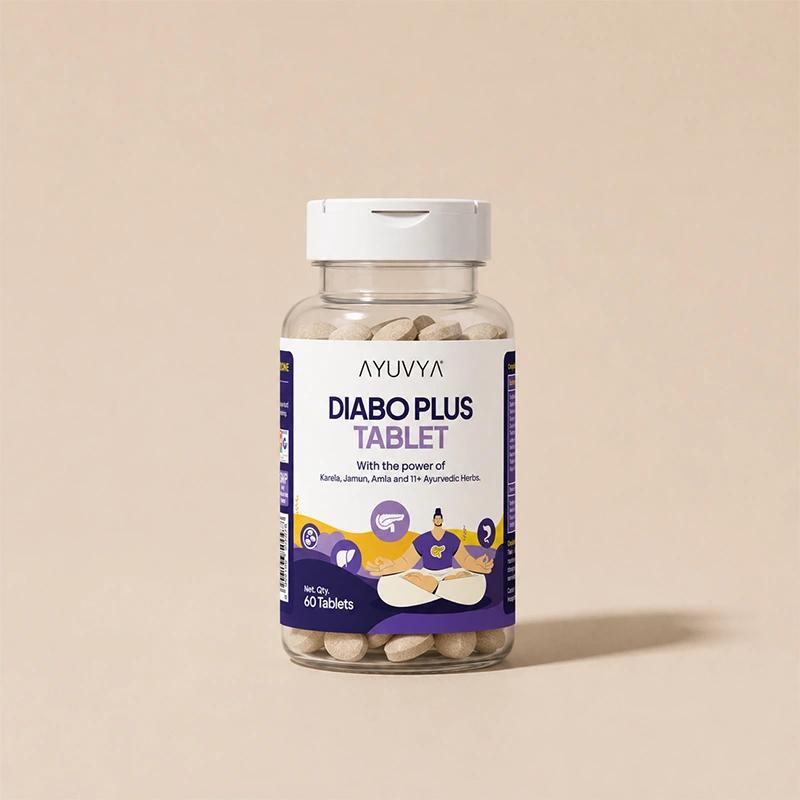
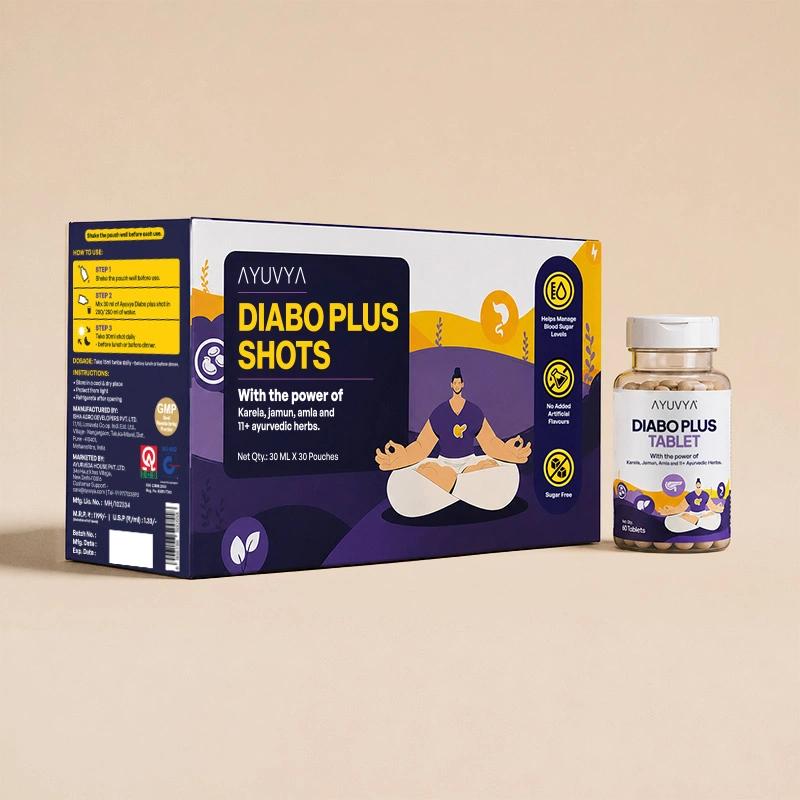
Ayuvya Diabo is made for people who want healthy sugar levels. See Diabo. Take it along with your doctor's medicine and a plate built the right way, not instead of them.
Read next:
- Foods that increase blood sugar: the list Charaka wrote
- Diabetes and cholesterol: 7 daily fixes for your heart
- Diabetic diet chart, Indian style
This article is for general information. It is not medical advice. GI values are averages from published tables, and change with the variety and the cooking. If you have diabetes, take insulin or other medicines, or have kidney disease, ask your doctor or dietitian how much grain suits you. Do not change any medicine based on this article.
Sources
- Atkinson FS, Foster-Powell K, Brand-Miller JC. International Tables of Glycemic Index and Glycemic Load Values: 2008. Diabetes Care
- Sonia S, Witjaksono F, Ridwan R. Effect of cooling of cooked white rice on resistant starch content and glycemic response. Asia Pac J Clin Nutr, 2015
- South First: Filling your plate the right way can help you manage diabetes (ADA plate method; Dr V Mohan)
- Stanford Medicine Nourish Project: Indian plate method
- US FDA, 21 CFR 101.81: Soluble fibre from oats, barley and psyllium and heart disease
- Charaka Samhita, Chikitsa Sthana 6 (Prameha Chikitsa), verses 4, 18–24, 36, 46–48
- University of Otago: Short walks after meals (Reynolds AN and colleagues, Diabetologia, 2016)
- Ministry of Health and Family Welfare / ICMR: Standard Treatment Workflow, Diabetes Mellitus Type 2 (2022): post-meal target below 180 mg/dL