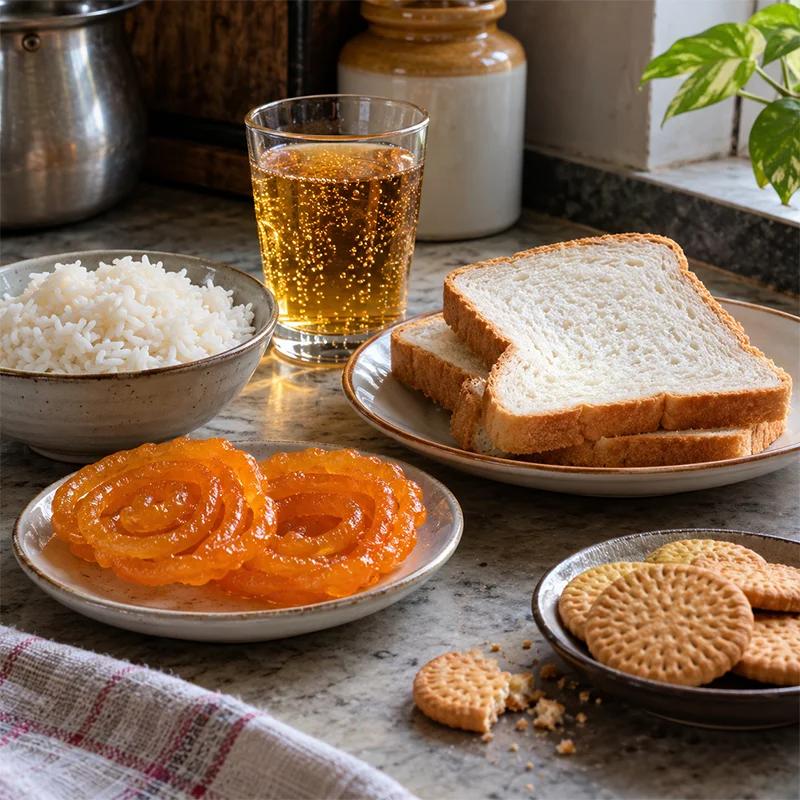
Here is Charaka's full list of foods that increase blood sugar, what modern science says about each one, and what Charaka says to eat instead.
Prameha causes in Ayurveda: the full verse
Charaka, Chikitsa chapter 6, verse 4, lists these causes of prameha:
- "Too much pleasure in sitting and lying around, and too much sleep"
- Curd
- Milk and milk dishes
- Freshly harvested grains and freshly made drinks
- Sweets made of jaggery
- "and everything that makes the body heavy"
The verse also names some animal foods, which we have left out.
These are causes that Charaka lists. It is not a rule that every spoon is forbidden. How much is right for you is a question for your doctor or Ayurvedic doctor.
1. Curd: is curd good for diabetes?
A bowl of dahi with every meal → A glass of takra (chaas) at lunch
This is the one that surprises people. Dahi is seen as healthy. But Charaka names curd among the causes of prameha.
Charaka's rules for curd, in full: curd should not be eaten at night. It should not be heated. And it should be eaten mixed with ghee, sugar, moong soup, honey or amla (Sutra chapter 7).
The better choice: the old book Ashtanga Hridaya calls takra (chaas, or buttermilk) light, sour, and good for digestion. It says takra reduces heaviness (chapter 5, verses 33–34).
An honest note on the science: a 2014 Harvard study of more than 100,000 people linked a daily serving of curd with an 18% lower risk of type 2 diabetes. Other milk foods did not show the same link. But this study only watched people; it did not test curd. The researchers said the reason is not understood and needs testing in trials.
What we suggest: follow Ayurveda's rules. Choose chaas at lunch. Never eat curd at night. If you do eat dahi, eat it in the daytime, mixed as Charaka says.
2. Jaggery sweets: is jaggery good for diabetes?
"Gur is healthy sugar" → Gur is sugar
Gur is often sold as the healthy choice instead of sugar. On blood sugar, both Ayurveda and modern guidelines say no:
Charaka names sweets made of jaggery as a cause of prameha (Chikitsa chapter 6, verse 4).
The World Health Organization defines free sugars as all sugar added to food and drinks by the factory, the cook or the person eating, plus the sugar in honey, syrups and fruit juice. It says keep them below 10% of daily energy, and better still below 5%. Gur stirred into tea or laddoos counts.
So gur chikki, gur ki chai and gur laddoos are not diabetes-friendly swaps. They are still sugar.
Image: a block of gur and a bowl of sugar with an equals sign between them
3. Freshly harvested grains: old rice for diabetes
New-crop rice → Old (aged) rice, with moong dal
Charaka names freshly harvested grains as a cause of prameha (verse 4). For prameha patients, the same chapter suggests "old shali rice, cooked and mixed with moong soup" (verses 18–24). It says the patient "should be given old rice, cooked and mixed with the tasty soup" (verse 36).
An honest note: we did not find a trial comparing old and new rice for blood sugar. So this rule rests on Charaka. Ask your grocer for aged (purana) rice.
4. Milk and milk sweets
Kheer, rabdi, kalakand, milk with sugar → Now and then, small, and without added sugar
Charaka lists milk and milk dishes among the causes of prameha (verse 4).
The WHO limit on free sugars does not count the sugar naturally present in milk. But it does count every spoon of sugar added to kheer, rabdi and milk mithai.
Of all the foods that increase blood sugar on this list, milk sweets are where both views meet. They mix milk and added sugar. Keep them for festivals, not for every evening.
5. Sitting, sleep and "everything that makes the body heavy"
Charaka's list opens with sitting in comfort and too much sleep. The same chapter says prameha is helped by exercise (verse 50). In a trial of people with type 2 diabetes, a 10-minute walk after each main meal cut post-meal sugar by 12%, and by 22% after dinner. Read the full guide: walking after meals for blood sugar.
The verse ends with "everything that makes the body heavy". So anything that adds heaviness belongs on this list of foods that increase blood sugar too. Ashtanga Hridaya describes this heaviness as heavy, cold and oily (chapter 1). So heavy, cold, oily and sweet foods, eaten often, push in the same direction.
What to eat in diabetes, as per Ayurveda
Avoiding foods that increase blood sugar is half the job. The same chapter of Charaka names what to eat:
- Barley (jau) in many forms: barley powder, and various barley dishes (Chikitsa chapter 6, verses 18–24).
- Old rice with moong soup (verses 18–24 and 36).
- "People who regularly eat roasted barley, dry grain flour, moong and amla do not get prameha" (verses 46–48).
Charaka's cause | Everyday example | Swap |
|---|---|---|
Curd | Dahi with every meal, dahi at night | Chaas at lunch; curd only in daytime, mixed as Charaka says |
Jaggery sweets | Gur chai, gur laddoo, chikki | Chai without sugar; roasted chana as the snack |
Freshly harvested grains | New-crop rice | Old rice with moong dal; jau roti |
Milk dishes | Kheer, rabdi, milk mithai | Keep for festivals, small portions |
Sitting in comfort, too much sleep | Sofa after dinner, afternoon nap | 10-minute walk after each meal |
Image: thali with jau roti, moong dal, old rice, amla and a glass of chaas
Printable card: foods that increase blood sugar from Charaka's list, and the swaps
Cutting down on foods that increase blood sugar? Add daily support to the same routine.
Ayuvya Diabo is made for people who want healthy sugar levels. See Diabo. Take it along with your doctor's medicine, not instead of it.
Read next:
- Walking after meals for blood sugar: the 10-minute rule
- Jaggery vs sugar for diabetes
- Rice or roti for diabetes?
Sources
- Charaka Samhita, Chikitsa Sthana 6 (Prameha Chikitsa), verses 4, 18–24, 36, 46–48 and 50
- Charaka Samhita, Sutra Sthana 7 (Naveganadharaniya Adhyaya): rules for curd
- Takra (buttermilk) in Ashtanga Hridaya Sutra 5/33–34, Wisdomlib
- Harvard T.H. Chan School of Public Health: Yogurt may reduce type 2 diabetes risk (Chen M and colleagues, BMC Medicine, 2014)
- World Health Organization: Guideline on sugars intake for adults and children (2015)
- University of Otago: Short walks after meals (Reynolds AN and colleagues, Diabetologia, 2016)