
The one rule: anything that hardens stool
Piles are made worse by hard stool and pushing. So a food is bad for piles if it does one of three things: fills you up with no fibre, dries you out, or sits heavy and slows digestion. Keep those three in mind and the list below writes itself.
The UK health service's piles page: "drink lots of fluid and eat plenty of fibre to keep your poo soft", and cut back on alcohol and caffeine, which can contribute to constipation. Its constipation page names "too much processed food" and "not drinking enough fluid (less than 1.5 litres per day)" among the causes.
Foods to avoid in piles: the 8
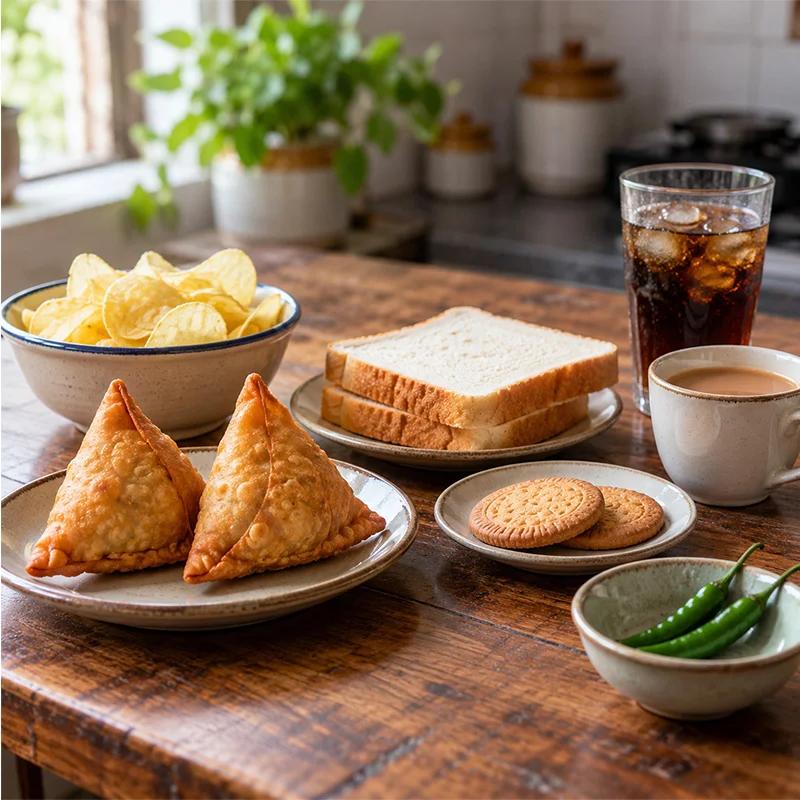
1. Maida: white bread, naan, bun, pav, bakery items
Maida has under 3 g of fibre per 100 g; atta has over 11, four times more. A maida sandwich fills the stomach and leaves nothing to soften the stool. The roti choice alone changes your day.
2. Biscuits and rusk with chai
Maida again, plus fat and sugar, four to six times a day. The classic Indian office snack is the classic Indian piles snack.
3. Fried snacks: samosa, pakoda, chips, namkeen
Heavy on digestion, no fibre, and they take the place of a fruit. Charaka's list of causes of piles starts with "heavy" food.
4. Packet noodles and pasta
Processed, refined, and eaten instead of dal-roti. The UK page's "too much processed food" in one packet.
5. Alcohol
On both lists. The UK page says to cut back on alcohol for piles because it can cause constipation. Charaka lists alcohol among the causes of the hot, bleeding kind of piles, and "wrongly fermented wines" among the general causes. It dries the body and hardens the stool. With active piles, stop it.
6. Five or six cups of chai instead of water
Two or three cups are fine. The problem is the person who drinks six and almost no water. The UK page says caffeine can cause constipation; the constipation page's fluid line is 1.5 to 2 litres a day. Chai does not get you there.
7. Stale, reheated, mixed-up food
From the old book: Charaka names stale food, wrongly fermented food and mixed-up food among the causes of piles, along with "mutually incompatible" pairs. Two-day-old dal, yesterday's rice fried up again, a plate with five different leftovers. Fresh and simple is the rule.
8. Half-set curd, and too much pickle
Charaka names "immature curds" (dahi that has not set fully) and pickles in excess. He also names sesame-and-jaggery sweets in excess, which in winter means the til-gur ladoo tin. A little is fine. A box a week is not.
Is spicy food bad for piles? The trial
Image: two identical capsules, chilli and placebo, a 48-hour clock, a flat symptom scale
They tested the mirchi. Nothing happened.
Diseases of the Colon and Rectum, 2006. 50 adults with piles (the second- and third-degree kind) each took two identical blue capsules a week apart: one with red hot chilli powder, enough to make a normal dish "spicy enough", and one with plain cellulose. Nobody knew which was which. Bleeding, swelling, itching, pain and burning were scored at 6, 24 and 48 hours. Result: "no significant differences detected between the red hot chili pepper or placebo groups." The paper's own title: "the explosion of a myth".
So one good trial says a spicy meal does not make piles bleed or swell more than a plain one. Two honest cautions. It was one meal, not a year of chilli every day. And the old books disagree in part:
Charaka lists "pungent, hot, salty" food, alcohol and heat among the causes of the hot kind of piles, the kind that bleeds. He does not name chilli, which came to India after his time, but red chilli is the pungent, hot food of the modern kitchen.
Our advice sits between the two. If chilli burns you on the way out, stop it; your body is telling you something the trial did not measure. If it does not, chilli is not your main problem. Fibre, water and the toilet habit are. Do not spend your effort on the mirchi and keep eating maida.
The old book's list, in plain words
Charaka, Chikitsa Sthana 14, verse 9, the causes of piles from food: heavy, cold and mutually incompatible food; sesame-and-jaggery sweets in excess; stale, mixed-up or wrongly fermented food; pickles and heavy fruits in excess; immature curds. And with them the habits: no exercise, day sleep, holding the urge, straining, hard seats.
By kind: dry, cold, light food and fasting bring the dry kind; pungent, hot, salty food, alcohol and heat bring the hot, bleeding kind; sweet, oily, heavy food and no exercise bring the heavy kind.
Read the modern list and the old list together. Maida, fried, processed, stale, alcohol, too little water: every one of them is "heavy", "stale", "wrongly fermented" or "drying" in the old words. The lists were written two thousand years apart and they are the same list.
What to eat instead
Maida bread, naan, pav→ Atta roti, bajra or jau rotiBiscuits and rusk→ Roasted chana, a guava, datesSamosa, pakoda, chips→ Sprouts, sweet potato, fruitPacket noodles→ Dalia, khichdi, poha with peasAlcohol→ Nothing, while piles are active6 cups of chai→ 2 cups of chai, 2 litres of water and chaasYesterday's leftovers, reheated→ Fresh, warm, simple foodHalf-set dahi, a lot of pickle→ Fully set dahi at lunch, chaas, a spoon of pickle at most
The full plate, with fibre numbers from India's own food tables, is in our piles diet chart. The stool rules are in constipation and piles.
Foods to avoid in piles: the ones that harden stool. Not the mirchi, the maida.
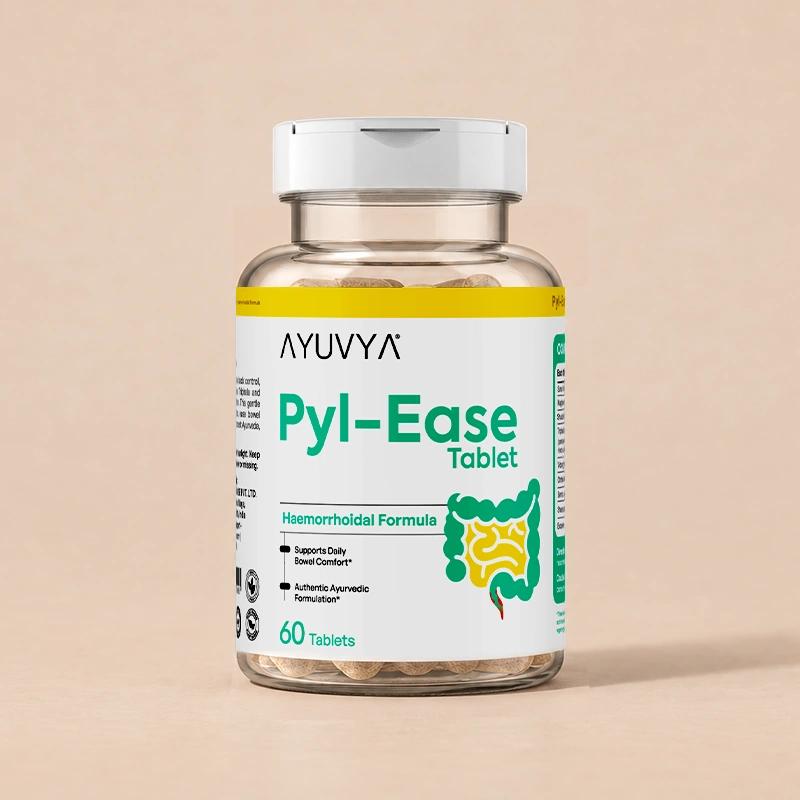
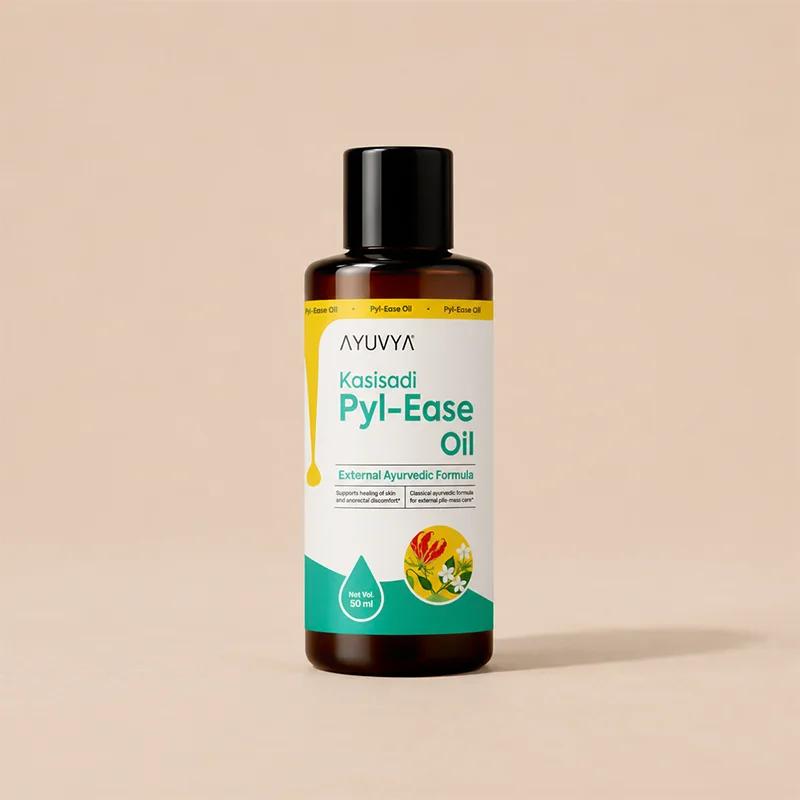
Ayuvya's Pyl Ease is made from Ayurvedic herbs to support people with piles, and comes with a piles diet chart that has this list on the back. See Pyl Ease. If you have bleeding with any warning sign, see a doctor first.
Sources
- NHS 111 Wales. Haemorrhoids (piles): fibre and fluid; alcohol and caffeine. 111.wales.nhs.uk
- NHS Fife. Constipation: causes (processed food, fluid under 1.5 litres) and self-help. nhsfife.org
- Altomare DF and colleagues. Red hot chili pepper and hemorrhoids: the explosion of a myth. Results of a prospective, randomized, placebo-controlled trial. Diseases of the Colon and Rectum, 2006;49:1018–1023 (50 patients; no difference vs placebo), as summarised by Unbound Medicine. unboundmedicine.com
- Longvah T and colleagues. Indian Food Composition Tables 2017, ICMR-NIN (fibre: wheat atta 11.4 g, refined wheat flour 2.8 g per 100 g). nin.res.in
- Charaka Samhita, Chikitsa Sthana, chapter 14 (Arsha Chikitsa): verse 9 on causes; verses 12–19 on the three kinds. carakasamhitaonline.com