

The 4 rules behind this piles diet chart
- 30 grams of fibre a day. The UK health service's target: "Adults should aim for 30g of fibre per day." Fibre holds water in the stool and keeps it soft, so it passes without pushing.
- 1.5 to 2 litres of fluid. Same source: "6 to 8 mugs". Fibre without water makes stool harder. The two go together.
- Food that is cooked, warm and fresh. The old book's rule. Charaka lists heavy, cold, stale and mixed-up food among the causes of arsha, and recommends soft cooked grains, curd, buttermilk and leafy vegetables.
- Nothing that fills the stomach with zero fibre. Maida, fried snacks, biscuits. They take the space of food that would have done the job.
High fibre Indian foods: the real numbers
These are from the Indian Food Composition Tables 2017, published by ICMR-NIN, which measured Indian foods in Indian labs. Fibre per 100 g of the raw food:
Fibre per 100 g raw (IFCT 2017)
Grains and flours | Fibre (g) | Dals and beans | Fibre (g) |
|---|---|---|---|
Barley (jau) | 15.6 | Whole chana (kala chana) | 25.2 |
Bajra | 11.5 | Soya bean | 21.6 |
Wheat atta | 11.4 | Whole moong | 17.0 |
Ragi | 11.2 | Dry peas | 17.0 |
Jowar | 10.2 | Rajma | 16.6 |
Rice, white | 2.8 | Chana dal | 15.2 |
Maida | 2.8 | Urad dal | 11.9 |
Lentil (masoor) dal | 10.4 | ||
Moong dal | 9.4 | ||
Arhar dal | 9.1 |
Fruits, nuts, seeds | Fibre (g) | Vegetables | Fibre (g) |
|---|---|---|---|
Alsi (flax seed) | 26.2 | Drumstick (sahjan) leaves | 8.2 |
Dry coconut | 15.9 | Drumstick pods | 6.8 |
Peanuts | 10.4 | Methi leaves | 4.9 |
Dates, dry | 9.0 | Chaulai (amaranth) leaves | 4.4 to 5.6 |
Guava | 7.4 to 8.6 | Carrot | 4.2 to 4.5 |
Fig (anjeer), fresh | 4.6 | Bhindi | 4.1 |
Raisins | 3.9 to 4.6 | Sweet potato | 4.0 |
Pear | 4.5 | Cauliflower | 3.7 |
Papaya, ripe | 2.8 | Beetroot | 3.3 |
Apple | 2.1 to 2.6 | Cabbage | 2.8 |
Banana | 1.9 | Pumpkin, lauki, cucumber, spinach | 2.1 to 2.6 |
Orange | 1.3 | Potato | 1.7 |
Three things to take from the table. Atta has four times the fibre of maida, so the roti choice alone changes the day. Whole dals beat split dals: kala chana and whole moong sit at the top. And guava, dates and pear beat apple and banana, though all fruit helps and the banana has its own job in the next section.
What to eat in piles: the plate
You do not need to count grams. Build each meal like this and the day reaches the target:
Meal | Eat | Fibre, about |
|---|---|---|
Breakfast | 2 atta or bajra rotis, or dalia, or oats; a guava or pear with skin | 8 to 10 g |
Mid-morning | A handful of roasted chana or peanuts, or 3 to 4 dates | 3 to 4 g |
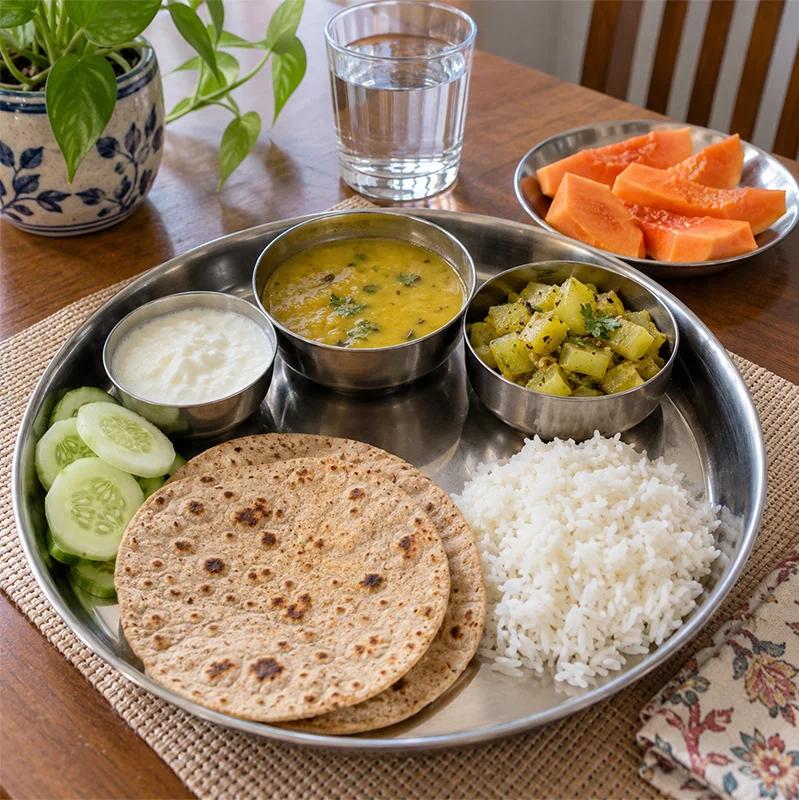
Lunch | A full katori of dal (chana, urad, masoor), a big serving of sabzi (bhindi, carrot, methi, chaulai), 2 atta rotis, salad, chaas | 10 to 12 g |
Evening | A fruit, or sprouted moong, or a bowl of cut papaya | 2 to 4 g |
Dinner | Rajma, chole or dal; a sabzi; rice or roti; a leafy vegetable | 8 to 10 g |
Night | Isabgol in a full glass of water, if stool is still hard | Extra |
Three easy wins: mix jau or bajra flour into the wheat atta, one part in three; soak whole chana or moong overnight and add it to lunch; keep a bowl of cut guava or papaya where the biscuits used to be.
Foods to avoid in piles
None of these have fibre. All of them take the space of food that does.
→ | Atta roti, bajra roti | |
→ | Roasted chana, a fruit | |
→ | Dalia, khichdi, poha with peas | |
→ | Sprouts, a sweet potato | |
→ | Water, chaas, 2 cups of chai | |
→ | Nothing. It dries you out |
The UK health service's piles page says to cut back on alcohol and caffeine, which can cause constipation. Its constipation page lists "too much processed food" and "not drinking enough fluid" among the causes.
What the old book says to eat and stop
Charaka Samhita, Chikitsa Sthana, chapter 14 (on arsha, piles).
To eat: thin and thick gruels (soft cooked grain, like dalia or khichdi), curd, buttermilk and leafy vegetables for constipated bowels; curd-and-rice dishes for bleeding piles.
To stop (verse 9): heavy, cold and mutually incompatible food; sesame-and-jaggery sweets in excess; stale, mixed-up or wrongly fermented food; pickles and heavy fruits in excess; "immature curds". And the habits that go with them: no exercise, day sleep, holding the urge, straining.
By the kind of piles: for the dry kind, the causes were dry, cold, light food and fasting, so the fix is warm, soft, oily food and regular meals. For the hot kind, the causes were pungent, hot, salty food and alcohol, so the fix is cool, mild food and no chilli. For the heavy kind, the causes were sweet, oily, heavy food and no exercise, so the fix is light food and movement.
Notice how the old list and the fibre table agree. Leafy vegetables, barley, soft cooked grain, buttermilk: all on both. The dahi rules still apply: daytime only, never at night, never heated, and not "immature" (half-set) curd, which the old book names as a cause.
Diet for bleeding piles
Same diet, two extra notes:
- From the old book: curd-and-rice dishes are recommended for bleeding piles (dahi-chawal at lunch, not at night). For the hot kind of piles, which bleed, stop red chilli, very salty food, alcohol and long hours in heat.
- From us: bleeding that is new, dark or black, or that comes with weight loss, a change in bowel habit, tiredness or stomach pain, needs a doctor before any diet. Our blog on piles symptoms lists the warning signs.
The 7-day piles diet chart
Breakfast and snacks rotate through the options above. Lunch and dinner:
Day | Lunch | Dinner |
|---|---|---|
Mon | Chana dal, bhindi, 2 atta rotis, salad, chaas | Rajma, rice, carrot-peas sabzi |
Tue | Kala chana curry, methi roti, dahi | Moong dal khichdi with ghee, lauki sabzi |
Wed | Masoor dal, chaulai saag, bajra roti, chaas | Chole, rice, cabbage sabzi |
Thu | Urad dal, drumstick sambar, rice, salad, dahi | Dalia with vegetables, a bowl of papaya |
Fri | Sprouted moong salad, dal, 2 atta rotis, chaas | Rajma or dry peas curry, jau-atta roti, beetroot sabzi |
Sat | Chana dal with lauki, cauliflower sabzi, roti, dahi | Moong dal, rice, methi sabzi |
Sun | Dahi-chawal with cucumber (daytime), sabzi, salad | Vegetable khichdi, a sweet potato |
With it, every day: a 1-litre bottle emptied twice, a fruit with skin, a 10-minute walk after dinner, and isabgol in a full glass at night if needed. Our blog on constipation and piles has the isabgol and toilet rules.
A piles diet chart is a soft-stool chart. Atta not maida, whole dals, a sabzi at every meal, fruit with skin, chaas, water.
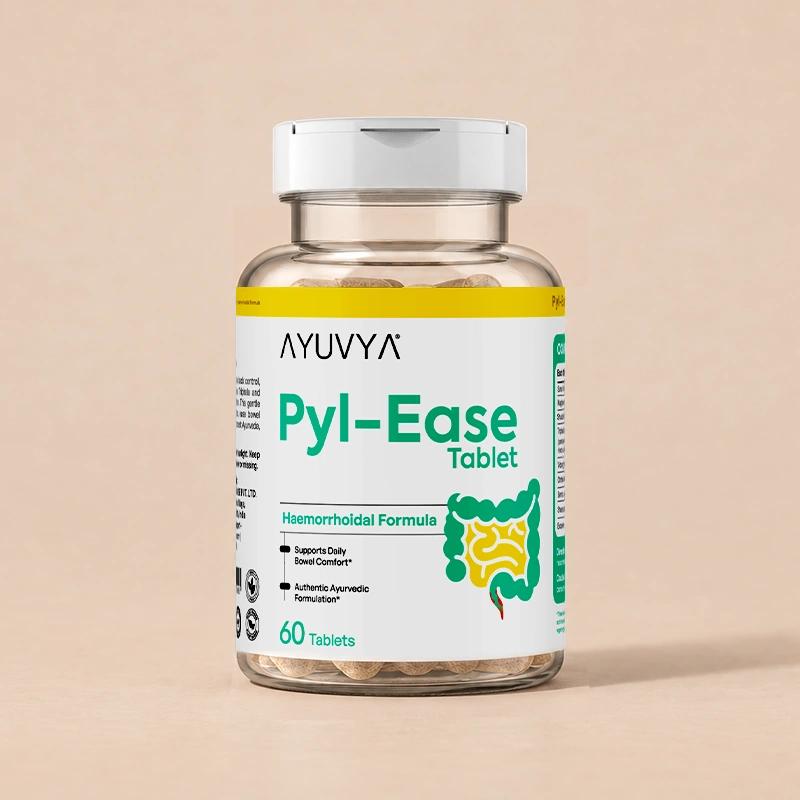
Ayuvya's Pyl Ease is made from Ayurvedic herbs to support people with piles, and comes with this diet chart printed in the box. See Pyl Ease. If you have bleeding with any warning sign, see a doctor first.
This article is for general information. It is not medical advice. Fibre figures are per 100 g raw from IFCT 2017; meal estimates use ordinary kitchen amounts and are rounded. Raise fibre slowly and drink enough water with it. New or dark bleeding, weight loss, or a change in bowel habit need a doctor.
Sources
- Longvah T and colleagues. Indian Food Composition Tables 2017, ICMR-National Institute of Nutrition (dietary fibre per 100 g for the foods listed). nin.res.in
- NHS Fife. Constipation: 30 g fibre a day; 1.5 to 2 litres fluid; causes including processed food and low fluid. nhsfife.org
- NHS 111 Wales. Haemorrhoids (piles): fibre and fluid advice; alcohol and caffeine. 111.wales.nhs.uk
- Charaka Samhita, Chikitsa Sthana, chapter 14 (Arsha Chikitsa): causes in verse 9; the three kinds (verses 12–19); foods for constipated bowels and bleeding piles. carakasamhitaonline.com
- Charaka Samhita, Sutra Sthana 7 (dahi rules). carakasamhitaonline.com