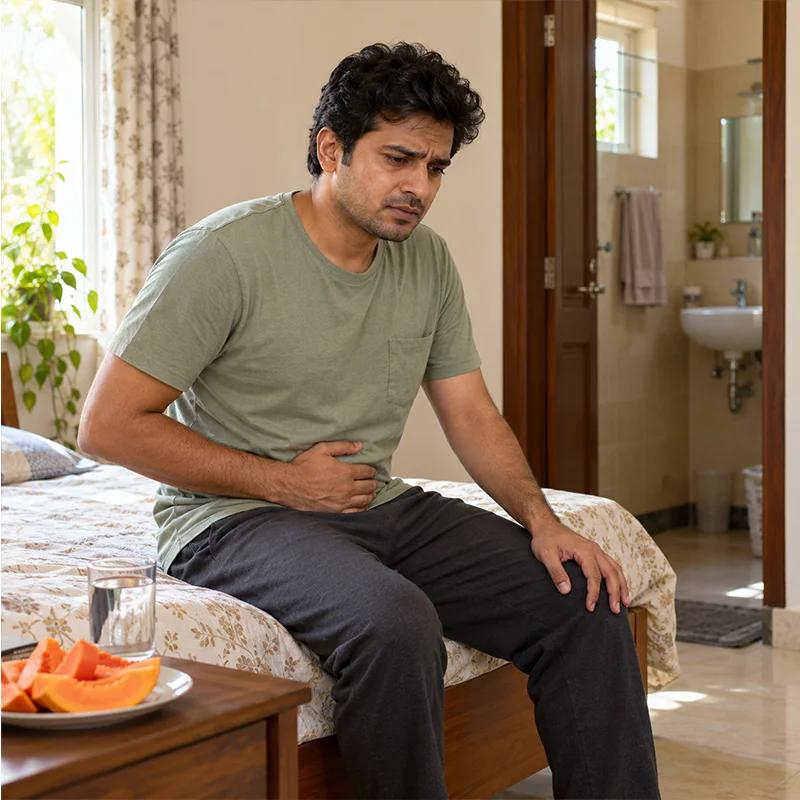

Constipation and piles: why they go together
The UK health service lists constipation first among the things that make piles more likely, with "pushing too hard when pooing" next to it. Its first piece of advice for piles: "drink lots of fluid and eat plenty of fibre to keep your poo soft."
The old book of Charaka, in its chapter on arsha (piles), says the cause is "depressed digestive power", and calls constipation "the root cause of arsha". His first step of treatment is to remove the causes and keep digestion strong, with soft cooked grains, curd, buttermilk and leafy vegetables for constipated bowels.
Two thousand years apart, the same sentence. The bottom is where piles show. The stomach is where they start.
Are you constipated? The 3-part check
Many people with piles say "my motion is fine". Check against the UK health service's definition:
- "When your bowels open fewer than three times a week."
- "Pain or straining on passing stool."
- "Stools which are hard and dry."
Any one of these counts. Most people with piles have number 2 even when number 1 is fine. If you push, you are constipated for the purpose of piles, however often you go.
The page's list of causes reads like an Indian office day: "irregular meals, especially skipping breakfast"; too little fibre and too much processed food; "not drinking enough fluid (less than 1.5 litres per day)"; "ignoring the urge to go to the toilet"; low activity; poor toilet posture; stress; irregular sleep; and some medicines, including iron tablets and some blood pressure medicines.
Fibre for piles: the 30-gram day
"Adults should aim for 30g of fibre per day." That is the UK health service's number. Fibre holds water inside the stool and keeps it soft and bulky, so it moves without pushing.
You do not need to count grams. Build the day so fibre is in every meal:
Meal | Fibre on the plate |
|---|---|
Breakfast | Oats, dalia or whole-wheat roti; a fruit with the skin (apple, guava, pear) |
Lunch | A full katori of dal; a big serving of sabzi; roti from whole-wheat atta, not maida; salad |
Evening | Roasted chana, a banana, or a bowl of fruit, not biscuits |
Dinner | Dal or rajma or chole; sabzi; rice or roti. Leafy vegetables, which the old book names for constipated bowels |
Swap out | Maida bread, biscuits, rusk, packaged noodles, fried snacks: fibre is zero and they fill the space |
Go up slowly. Doubling fibre overnight gives gas and bloating, and people stop. Add one item a day for a week. And fibre without water makes stool harder, not softer, so read the next section.
How much water for constipation
The UK page: "Make sure you drink enough (1.5 to 2 litres a day or 6 to 8 mugs)." And it names "not drinking enough fluid (less than 1.5 litres per day)" as a cause.
Chai counts a little, but the page also says to cut back on alcohol and caffeine, which can cause constipation. So count water, chaas, soup, dal and fruit as your fluid, and keep chai to 2 or 3 cups. A 1-litre bottle on the desk, emptied twice, is the easiest way to know you have done it.
Isabgol for piles: the water rule
Image: isabgol packet, teaspoon, and a full glass of water
The glass must be full. Isabgol without enough water does the opposite job.
Isabgol (psyllium husk) is the one thing in most Indian homes that is also in the US medicine guide. It soaks up water and makes a soft, bulky stool. Done right, it is the single most useful thing for constipation and piles. Done wrong, it makes things worse.
From the US medicine guide (MedlinePlus):
- Take it with a full glass of liquid, about 240 ml, every time. This much liquid is needed to prevent side effects, and trouble swallowing is one of the side effects it lists.
- Mix it just before drinking, and drink at once, before it turns thick.
- Keep it 3 hours away from aspirin and some other medicines. It does not list every medicine, so ask your doctor or chemist about yours.
How to do it: one dose at night (about a teaspoon, or as your packet says), stirred into a full glass of water, drunk at once, then a little more water. Start with one dose a day for a week. If stool is still hard, add a morning dose. Not in hot chai, not in milk, not dry.
Toilet position for piles: knees above hips
The UK page's advice on position: "Get your knees higher than your hips." Use a footrest with feet flat, lean forward with elbows on knees, and relax as much as possible. Its routine advice: "When you get the urge to empty your bowel, go to the toilet", and allow plenty of time.
The old Indian squat toilet does this by itself, which is one reason the footstool exists. On a Western seat, a small stool under the feet gives the same shape. Then three rules:
- Go when the urge comes. Holding it dries the stool.
- Do not push. If nothing comes in a few minutes, get up. Come back later. The UK piles page: "do not push too hard when pooing" and "do not spend more time than you need to on the toilet".
- Phone stays outside. A phone turns 3 minutes into 20 minutes of pressure on the bottom.
What the old book says
Charaka's chapter on arsha lists the habits behind constipation and piles: "suppression of natural urges", "continued and excessive strain", lack of exercise, day sleep, and heavy, stale, mixed-up food. His food for constipated bowels: thin and thick gruels (soft cooked grain), curd, buttermilk and leafy vegetables. For bleeding piles, curd-and-rice dishes.
Three things to keep from it that the modern page does not say: eat your main meals warm and cooked, not cold and raw, so digestion stays strong; drink chaas with lunch; and do not sleep in the day if you are the heavy kind. The dahi rules still apply: daytime only, never at night, never heated.
The 2-week plan
Week | Do this |
|---|---|
Week 1 | Breakfast every day, never skipped. A 1-litre bottle emptied twice. A full katori of dal at lunch and dinner. One fruit with skin. Isabgol in a full glass at night. Footstool under the feet. Go when the urge comes; no pushing; phone outside. |
Week 2 | Add a big sabzi or leafy vegetable to both meals. Chaas with lunch. A 10-minute walk after dinner. If stool is still hard, add a morning isabgol. Chai down to 2 or 3 cups. |
After 2 weeks | Stool soft, no pushing, bleeding less: keep going. Still hard, still bleeding, or any warning sign below: see a doctor. |
See a doctor if (UK health service): there is "new bleeding from the back passage"; a sudden change in bowel habit for no clear reason lasting more than 3 weeks in people over 40; new stomach pain or lasting bloating; or constipation that "does not get better with simple treatments and is causing you trouble". For piles: worse, or no better after 7 days of home care.
Constipation and piles: soften the stool and most piles settle. Fibre, water, isabgol, footstool.
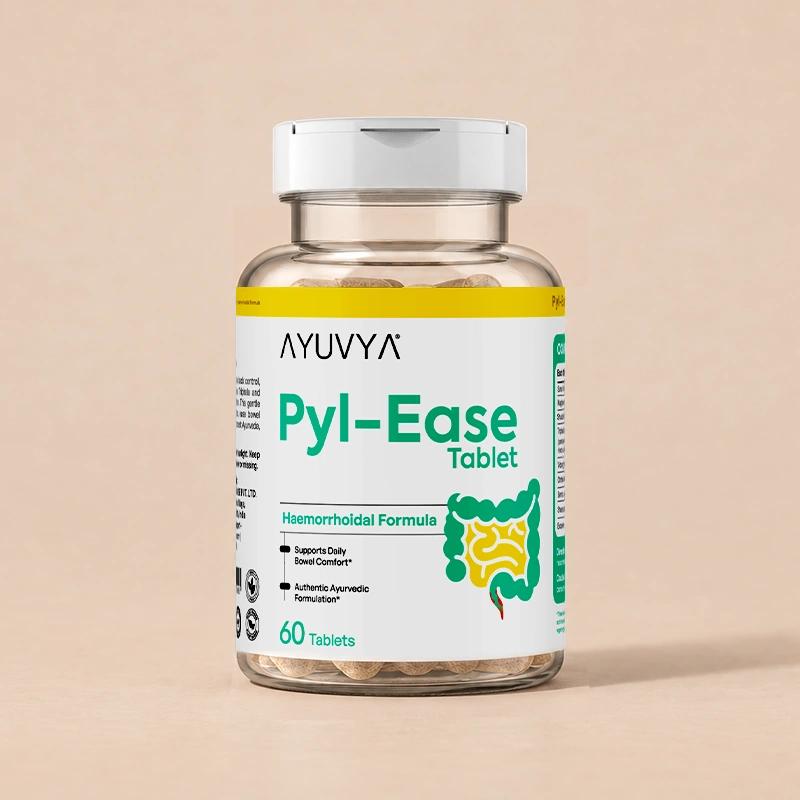
Ayuvya's Pyl Ease is made from Ayurvedic herbs to support people with piles, and comes with a simple piles diet chart built on exactly this plan. See Pyl Ease. If you have any of the warning signs above, see a doctor first.
This article is for general information. It is not medical advice. New bleeding from the bottom, a change in bowel habit lasting weeks, stomach pain, or constipation that does not improve with simple measures need a doctor. If you take regular medicines, ask your doctor or chemist before starting isabgol.
Sources
- NHS Fife. Constipation: definition, causes, self-help (30 g fibre; 1.5 to 2 litres fluid; toilet position; routine) and when to see a doctor. nhsfife.org
- NHS 111 Wales. Haemorrhoids (piles): causes and prevention advice. 111.wales.nhs.uk
- MedlinePlus (US National Library of Medicine). Psyllium: how to take it, liquid amount, medicine gap, side effects. medlineplus.gov
- Charaka Samhita, Chikitsa Sthana, chapter 14 (Arsha Chikitsa): constipation as the root cause; causes in verse 9; foods for constipated bowels and bleeding piles. carakasamhitaonline.com
- Charaka Samhita, Sutra Sthana 7 (dahi rules). carakasamhitaonline.com