The quick answer, in one table
Dairy when cholesterol is high
Food | Verdict | The rule |
|---|---|---|
Chaas (buttermilk) | Best | Daily, with lunch. Most of the fat is gone. |
Toned / double-toned milk | Good | A glass a day. India's guidelines say keep milk. |
Dahi (from toned milk) | Good | Daytime only. Never at night. Never heated. |
Paneer (from toned milk, or low-fat) | OK | Small katori, 2 to 3 times a week. Not fried. |
Full-cream milk, full-fat paneer | Limit | 6% fat milk. Keep for guests and festivals. |
Khoya, malai, cream, mithai | Avoid | Fat plus sugar. The worst mix for your report. |
Is paneer bad for cholesterol? It is about the fat
Dairy does not "contain" much cholesterol in the way people think. The problem is saturated fat, the fat that is solid at room temperature. Milk fat is mostly this kind. Saturated fat makes your liver put more bad cholesterol (LDL) into the blood.
What India's 2024 food guidelines say. The ICMR-NIN dietary guidelines ask for total fat to be 30% of calories or less, and say to limit saturated fats. In the same breath they say milk should be part of the daily diet for people of all ages. A senior NIN scientist put the usual amount at about 300 ml of milk a day. So the guideline is not "stop dairy". It is "keep dairy, cut the fat".
So the question for every dairy food is simple: how much fat is in it? Paneer, milk, dahi and chaas are all made from the same milk. What changes is how much fat stays behind.
Which milk is best for cholesterol
Same milk, different fat. The packet tells you.
Indian milk packets follow national standards. The minimum fat in each type is fixed by law:
Packet says | Fat (minimum) | Fat in one 250 ml glass |
|---|---|---|
Full-cream milk | 6.0% | about 15 g |
Toned milk | 3.0% | about 7.5 g |
Double-toned milk | 1.5% | under 4 g |
Read the glass column again. Switching from full-cream to toned milk removes half the fat from every glass, every chai, every dahi and every paneer in your house. You do not change a single recipe. This is the single biggest dairy fix for your report.
Loose milk from a dairy? Buffalo milk usually has more fat than cow milk. If you buy loose milk, boil it, cool it, and take the malai off before use. Use that milk for chai, dahi and paneer. The malai goes to the ghee pot, not to your cup.
Paneer and cholesterol: how to keep it
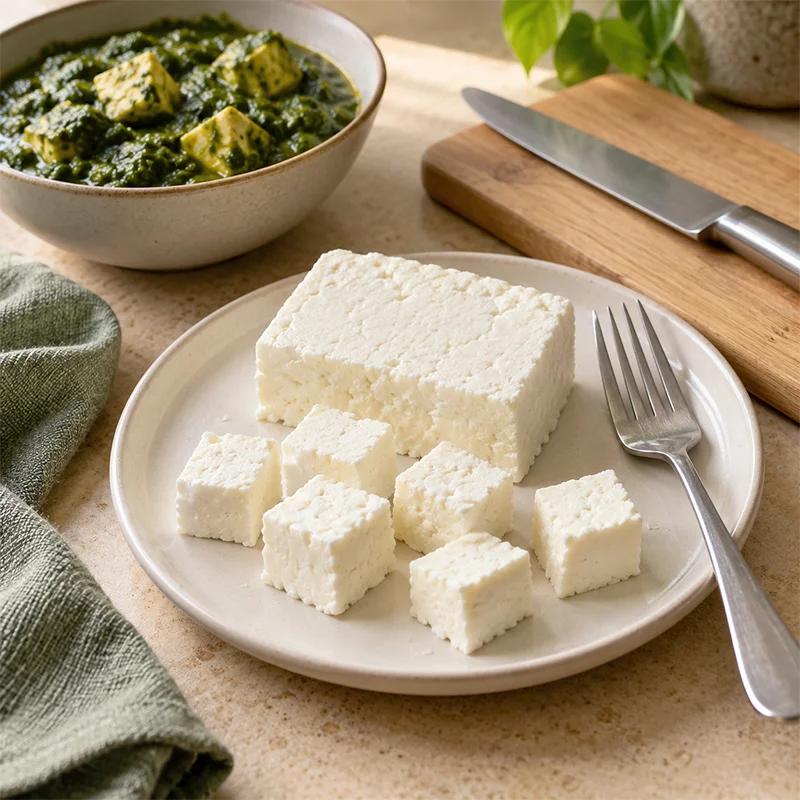
Paneer is milk with the water taken out. So the fat of the milk stays in the paneer, now packed into a small block. Paneer from full-cream milk is a high-fat food. Paneer from toned milk is a medium-fat food. "Low-fat paneer" packs are now in most cities. Read the label.
Paneer also has protein and calcium, and it keeps you full. For a vegetarian family it is an important food. So the plan is to keep it, with three rules:
- Make it from toned milk, or buy low-fat paneer. At home, boil toned milk and curdle it with lemon or a little old chaas. It is easy.
- A small katori, not a plate. Paneer should sit next to a plate of sabzi and dal, not replace them.
- Grill, tawa-fry with a few drops of oil, or add to sabzi. Deep-fried paneer pakoda, paneer in malai gravy, and paneer with cream double the fat.
A useful finding. A pooled analysis of 4 trials compared cheese with butter, with the same amount of fat in each. Cheese raised bad cholesterol less: about 0.21 mmol/L (8 mg/dL) lower than butter. The researchers' words: cheese "appears less hypercholesterolemic than butter". Paneer is a fresh cheese. The trials used European cheese, not paneer, so we cannot copy the number exactly. But it fits a simple rule: eat your milk fat as paneer or dahi, not as butter, malai or cream.
Dahi for cholesterol: the old rules
Dahi made from toned milk is a good daily food. One large study followed over 190,000 people. Those who ate dahi regularly had an 18% lower chance of getting diabetes. Important: that study only watched what people ate. It did not test dahi against no dahi. So it is a hint, not proof.
Charaka's dahi rule (Sutra Sthana, chapter 7). Dahi is not to be eaten at night. It is not to be eaten hot. It is to be taken mixed with something: with moong dal soup, with honey, with ghee, with sugar, or with amla. And it is not to be eaten daily by itself.
Charaka on prameha, the old name for sugar disease (Chikitsa Sthana, chapter 6). Among its causes he names too much sitting, too much sleep, and "curds, milk preparations and fresh grains". So dahi and milk sweets in excess are a known problem in the old books too.
Put together: dahi at lunch, from toned milk, with a pinch of roasted cumin, as a side to dal-roti. Not a big bowl at 10 pm. Not heated into a hot kadhi every day. And never with sour fruit mixed in.
Chaas benefits: the winner
Chaas: dahi with the fat churned out and water added.
Chaas is dahi churned with water. When you churn dahi, the fat rises as butter and is taken out. What is left is the protein, the calcium, the good bacteria, and very little fat. It is the one dairy food you can have every single day without thinking about your report.
The old books agree. In Charaka's diet for people with too much body fat (Sutra Sthana, chapter 21), takrarishta, a drink made from chaas, is listed. Vagbhata, in his chapter on liquids (Ashtanga Hridaya, Sutra Sthana, chapter 5), praises takra. One caution from the old books: do not take chaas with banana. The two are listed as a bad pair.
Make it right. 1 part dahi (from toned milk) to 2 or 3 parts water. Churn well. Add roasted cumin powder, a little black salt and chopped coriander. Drink with lunch. In winter, do not take it ice cold.
What the old books say about milk
Milk and sour things do not mix. Charaka (Sutra Sthana, chapter 26) lists sour foods with milk among the bad pairs. So: no lemon, no sour fruit, no tomato gravy poured into milk. Fruit-and-milk shakes with sour fruit are out.
Ghee and the heavy body. Charaka (Sutra Sthana, chapter 13) calls ghee the best of fats, but says it is not for people with too much body fat or heaviness in the body. The same logic applies to malai and cream. Full-cream milk in a person who is already heavy is the old books and the new guidelines saying the same thing.
Paneer is not in the old books. The old texts talk of milk, dahi, takra, butter and ghee. Paneer as we eat it today is not there. So for paneer we go by the modern fat logic above, and by Charaka's rule for heavy foods (Sutra Sthana, chapter 5): eat heavy foods only to one-third or half of your hunger.
A sample dairy week
Every day | 2 to 3 days a week | Festivals only |
|---|---|---|
1 glass toned or double-toned milk (in chai, or plain) 1 glass chaas with lunch 1 small katori dahi at lunch, if you like | 1 small katori paneer from toned milk, grilled or in sabzi | Full-cream milk, malai, khoya, mithai, paneer in cream gravy |
Swap list for the kitchen:
Full-cream milk → Toned milk
Paneer butter masala → Paneer bhurji with onion, tomato, capsicum
Dahi at dinner → Dahi at lunch, chaas at dinner if needed
Malai in chai → Chai with toned milk, malai removed
Mithai after dinner → A few dates or a piece of fruit, an hour later
Is paneer bad for cholesterol? No. The wrong milk and the wrong amount are.
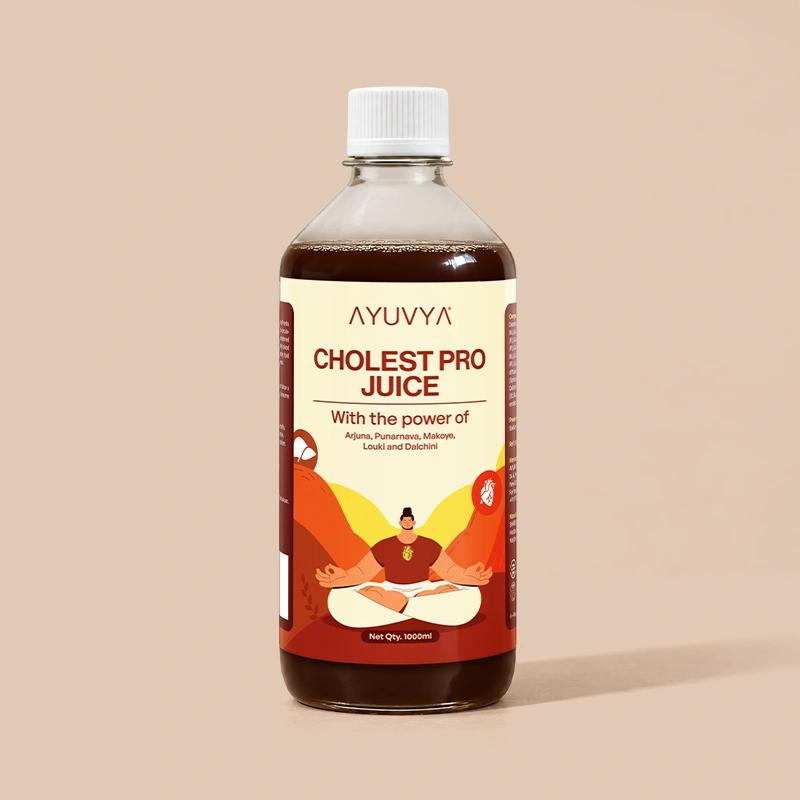
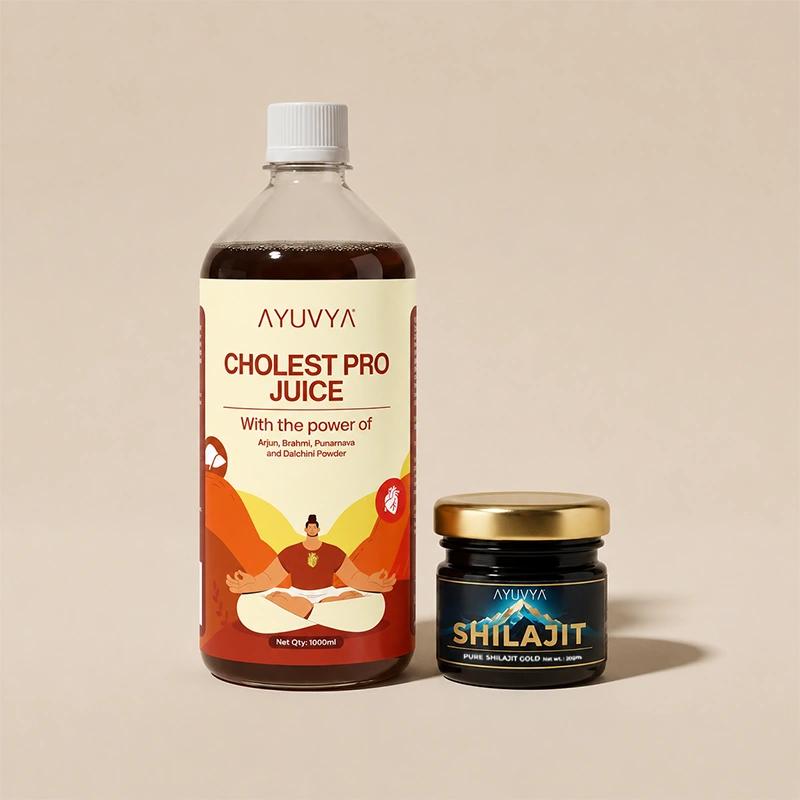
Fix the milk packet, keep dahi to the daytime, make chaas your daily drink. For daily support alongside these habits, Ayuvya's Care of Cholesterol juice is made from Ayurvedic herbs, and comes with a simple Indian diet chart that already follows these dairy rules. See Care of Cholesterol, or read ghee for cholesterol for the other half of the dairy question.
Related reading: Foods to avoid at night for cholesterol · Food swaps to lower cholesterol · Oats vs barley for cholesterol
This article is for general information. It is not medical advice. Fat per glass is calculated from the legal minimum fat for each milk type; real packets may have slightly more. If your cholesterol is high, talk to your doctor before changing or stopping any treatment.
Sources
- Department of Consumer Affairs, Government of India. Packaged pasteurised toned milk: standards under the FSS Regulations (full cream 6.0% fat, toned 3.0%, double toned 1.5%). consumeraffairs.nic.in
- ICMR-NIN Dietary Guidelines for Indians 2024, as reported by South First (total fat ≤30% of energy, limit saturated fats, milk daily for all ages). thesouthfirst.com
- The Federal, interview with Dr Subba Rao, NIN (about 300 ml milk a day; milk, curds, buttermilk good; fats from more than one source). thefederal.com
- de Goede J, Geleijnse JM, Ding EL, Soedamah-Muthu SS. Cheese consumption and blood lipids: a systematic review and meta-analysis. Circulation 2014;129(S1):MP66 (4 pooled trials, cheese vs butter, LDL −0.21 mmol/L). research.wur.nl
- Chen M, Sun Q, Giovannucci E and colleagues. Dairy consumption and risk of type 2 diabetes: 3 cohorts of US adults and an updated meta-analysis. BMC Medicine 2014 (yogurt, 18% lower risk). bmcmedicine.biomedcentral.com
- Charaka Samhita: Sutra Sthana 5 (heavy foods), 7 (dahi rules), 13 (ghee), 21 (diet for excess body fat, takrarishta), 26 (milk and sour foods); Chikitsa Sthana 6 (prameha causes). carakasamhitaonline.com
- Ashtanga Hridaya, Sutra Sthana 5 (takra); Bhojanakutuhala (banana with takra as a bad pair).