Each of these food swaps to lower cholesterol comes with its proof: a clinical study, India's food regulator FSSAI, or a classical Ayurvedic text. And every Ayurvedic rule is quoted in full, including how a food must be eaten.
Swap 1: Vanaspati to mustard oil, the best cooking oil for cholesterol in India?
Vanaspati / dalda → Mustard oil
The problem: trans fat in vanaspati
Trans fat is the worst fat for your cholesterol: it raises LDL ("bad") cholesterol and lowers HDL ("good") cholesterol at the same time. In India, trans fats are "majorly present in vanaspati which is used to prepare mithai and fried foods", according to coverage of FSSAI's rules. The WHO also lists vanaspati ghee as a source.
Good news from FSSAI: since 1 January 2022, India limits industrial trans fat to not more than 2% in all fats and oils. Packaged products must comply. Loose fried snacks sold without a label can't be checked, so those are worth cutting down.
Mustard oil for cholesterol: what the label and Ayurveda say
Mustard oil is about 59% monounsaturated fat, with some omega-3 (ALA), according to USDA data. Harvard's nutrition guidance is clear that eating unsaturated fats in place of saturated fat lowers LDL cholesterol.
What Ayurveda says: Bhavaprakasha describes mustard oil (sarshapa taila) as reducing kapha and meda, and also as aggravating pitta and blood. So use it in normal cooking amounts, and go easy if you tend towards acidity or heat-related problems.
Swap 2: Ghee by the ladle to ghee by the teaspoon. Is ghee good for cholesterol?
A ladle on every meal → 1 teaspoon, measured
Of all the food swaps to lower cholesterol, this one needs the most care, because ghee is both a heart worry and a cornerstone of Ayurveda. Both sides are true.
The label: ghee is about 62% saturated fat (USDA data for butter oil, anhydrous). Saturated fat raises LDL cholesterol.
What Ayurveda says: Charaka calls ghee the best of all fats (Charaka Sutra 13) and the best for pacifying vata and pitta (Charaka Sutra 25/40). But the same tradition advises against heavy use of fats for people with excess kapha and meda (Charaka Sutra 13), which describes most people with high cholesterol.
One more classical rule: Charaka lists ghee and honey in equal quantity as an incompatible food (viruddha ahara, Charaka Sutra 26). If a home remedy mixes the two, the amounts must not be equal.
How to make the swap
- Keep a teaspoon in the ghee jar, and use only that.
- Use ghee on top of roti or dal, where you taste it; don't fry puris or parathas in it.
- Cook the sabzi and tadka in mustard oil instead.
Swap 3: Namkeen to roasted chana or almonds, healthy snacks for cholesterol
Namkeen, biscuits, bakery puffs → Roasted chana or a few almonds
If your evening chai comes with namkeen, biscuits or bakery puffs, this swap is for you. Two better options both have studies behind them:
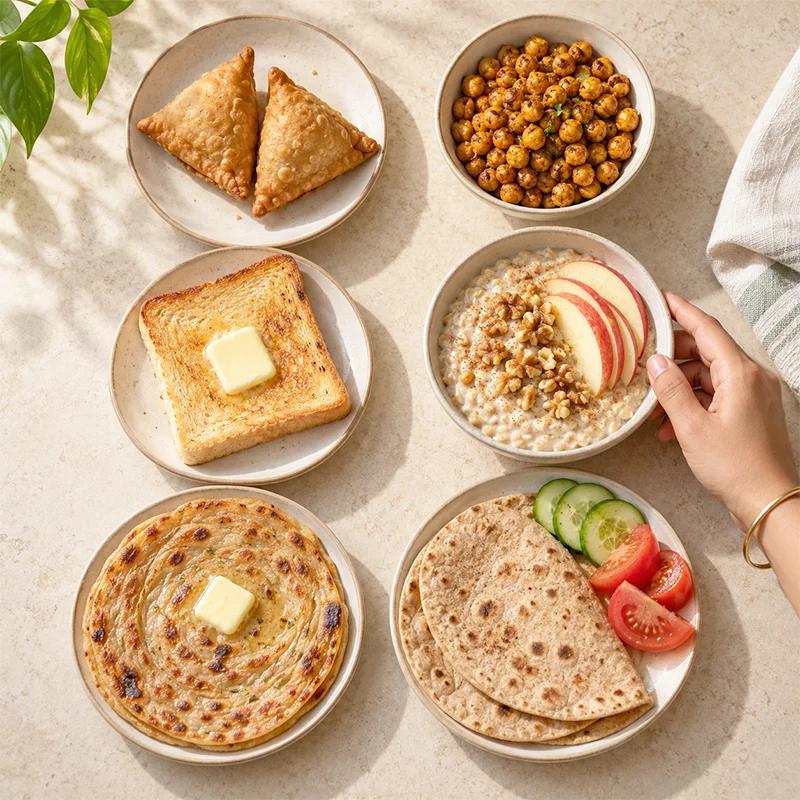
- Roasted chana: pulses significantly lowered LDL cholesterol in a meta-analysis of trials, at about one serving (around 130 g) a day.
- Almonds and walnuts: nuts lowered LDL by 7.4% in a pooled analysis of trials, at about 67 g a day. Start with a small handful, since nuts are calorie-dense.
Why Ayurveda agrees: Charaka names a "heavy, sweet, cold and fatty diet" as a cause of excess meda (Charaka Sutra 21/4). Fried namkeen is heavy and fatty on both counts.
Swap 4: Maida to jau or whole-wheat atta
Maida roti, bread, naan → Jau (barley) or whole-wheat atta
Barley carries beta-glucan, a soluble fibre. The US FDA allows a heart-health claim for foods that provide 3 g or more of beta-glucan a day from whole oats or barley.
What Ayurveda says: Charaka recommends yava (barley) for excess meda, specifically yava powder with amalaka (amla) (Charaka Sutra 21/23).
Start half-and-half: pure jau roti can feel dry. Mix jau atta with whole-wheat atta 1:1 for the first few weeks, then increase the jau.
Swap 5: Nothing to a spoon of isabgol. Isabgol for cholesterol, explained
Nothing → Psyllium husk (isabgol)
This one is an addition rather than a swap: one measured spoon a day, and the rest of your meals stay the same.
- The US FDA allows a heart-health claim for 7 g or more of soluble fibre a day from psyllium seed husk.
- About 10 g of psyllium husk a day lowered LDL by about 13 mg/dL, according to Harvard Health's summary of the research.
How to take it: follow the dose on your pack and always take it with plenty of water. If you take other medicines, ask your doctor first about timing.
All 5 food swaps to lower cholesterol at a glance
Swap this | For this | The proof |
|---|---|---|
Vanaspati / dalda | Mustard oil | Trans fat raises LDL and lowers HDL; FSSAI caps it at 2% since 2022 |
Ghee by the ladle | Ghee by the teaspoon | About 62% saturated fat; Charaka advises against heavy fats in excess kapha and meda |
Namkeen with chai | Roasted chana or almonds | Pulses and nuts both lowered LDL in meta-analyses |
Maida | Jau or whole-wheat atta | 3 g/day barley beta-glucan carries an FDA heart claim; Charaka recommends yava |
Nothing | Isabgol | About 10 g/day psyllium lowered LDL by about 13 mg/dL |
Don't try all five food swaps to lower cholesterol in one week. Start with the one that feels easiest, keep it for a fortnight, then add the next. Get a lipid test before you start and again after a few months, so you can see what changed.
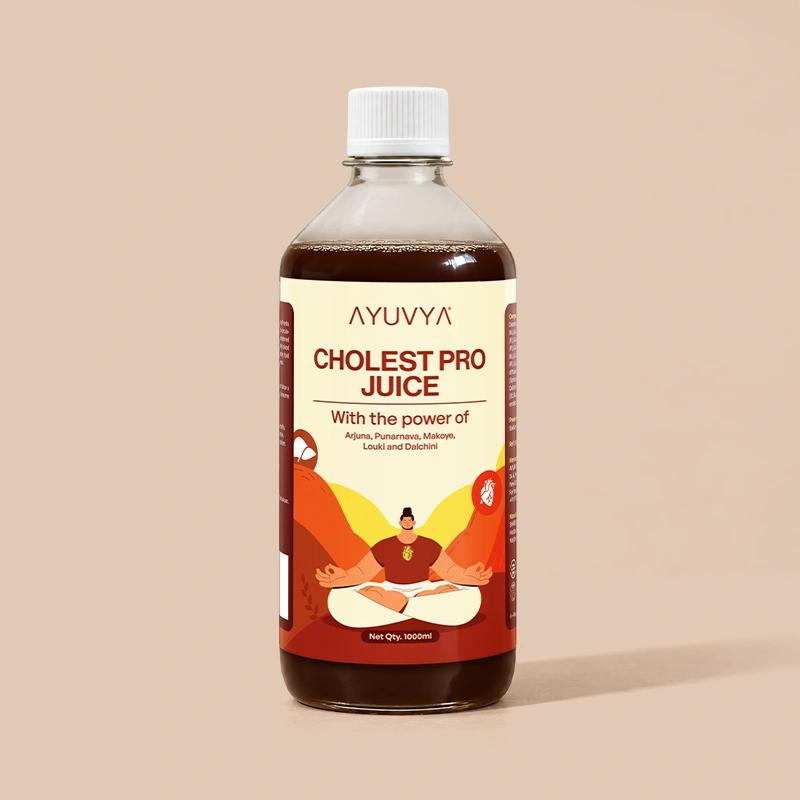
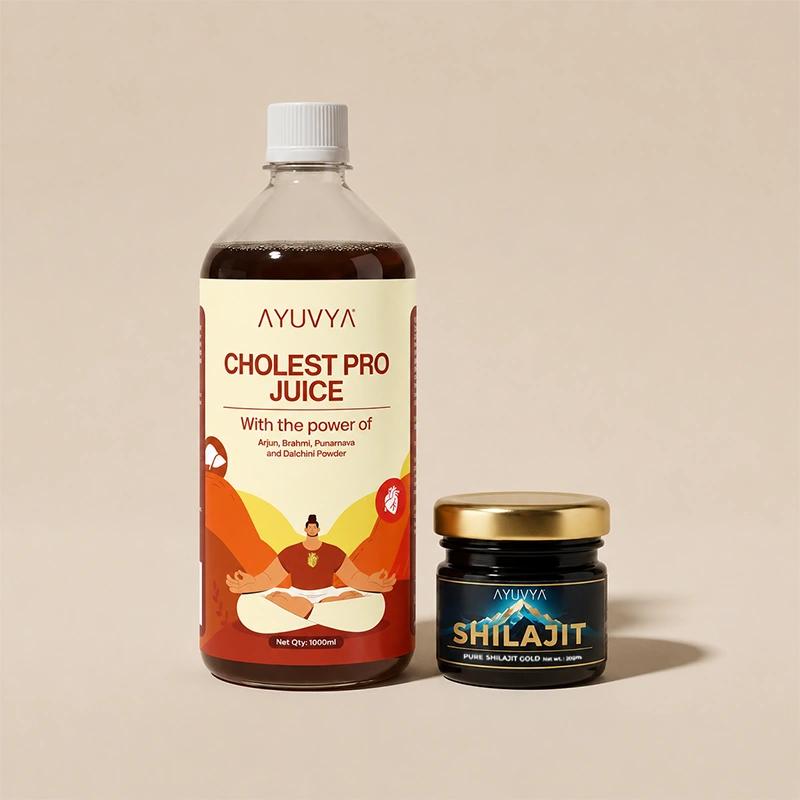
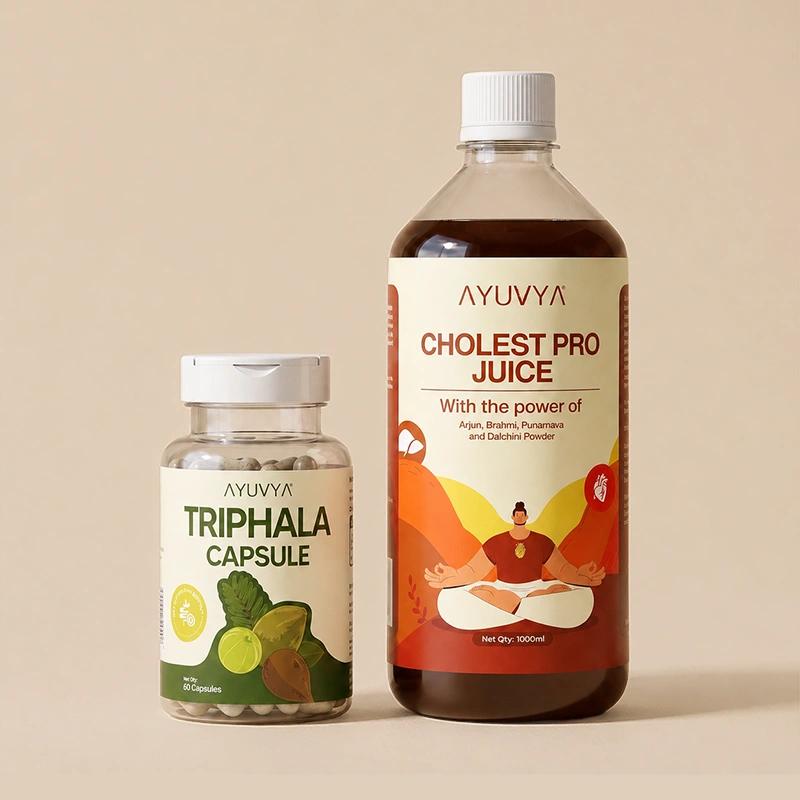
Making these food swaps to lower cholesterol? Add daily support. Ayuvya Cholest Pro Juice is made for people working on healthy cholesterol levels. Make it part of the same daily routine.
Read next:
- 6 foods that lower cholesterol naturally
- Indian breakfast for cholesterol: 3 recipes under 20 minutes
- Foods to avoid at night: 5 mistakes that hurt cholesterol
This article is for general education and is not medical advice. These swaps support healthy cholesterol as part of a balanced diet; they do not diagnose, treat or cure any disease. If you have diabetes, a digestive condition or another medical condition, take medicines, or are pregnant, ask your doctor before changing your diet or adding isabgol.
Sources
- Mayo Clinic: Trans fat is double trouble for your heart health
- FSSAI: trans fat limit of 2% from January 2022, and vanaspati as the main source (BusinessLine, 2021)
- WHO fact sheet: Trans fat
- USDA nutrient data: Oil, mustard
- USDA nutrient data: Butter oil, anhydrous (ghee)
- Harvard T.H. Chan School of Public Health: Types of fat
- Ha V et al. Effect of dietary pulse intake on established therapeutic lipid targets. CMAJ, 2014
- Sabaté J et al. Nut consumption and blood lipid levels. Arch Intern Med, 2010 (reported by LiveScience)
- US FDA, 21 CFR 101.81: Soluble fibre from oats, barley and psyllium and heart disease
- Harvard Health: Psyllium fibre and healthier lipid levels
- Charaka Samhita, Sutra Sthana 13 (Snehadhyaya), Planet Ayurveda translation
- Charaka Samhita, Sutra Sthana 25 (Yajjah Purushiya Adhyaya)
- Charaka Samhita: Viruddha Ahara (incompatible foods), Sutra Sthana 26
- Charaka Samhita, Sutra Sthana 21 (Ashtauninditiya Adhyaya)
- Mustard oil (Sarshapa taila) in Ashtanga Hridaya and Bhavaprakasha, Easy Ayurveda