Ayurveda and the Rain
SHARE THIS BLOG:
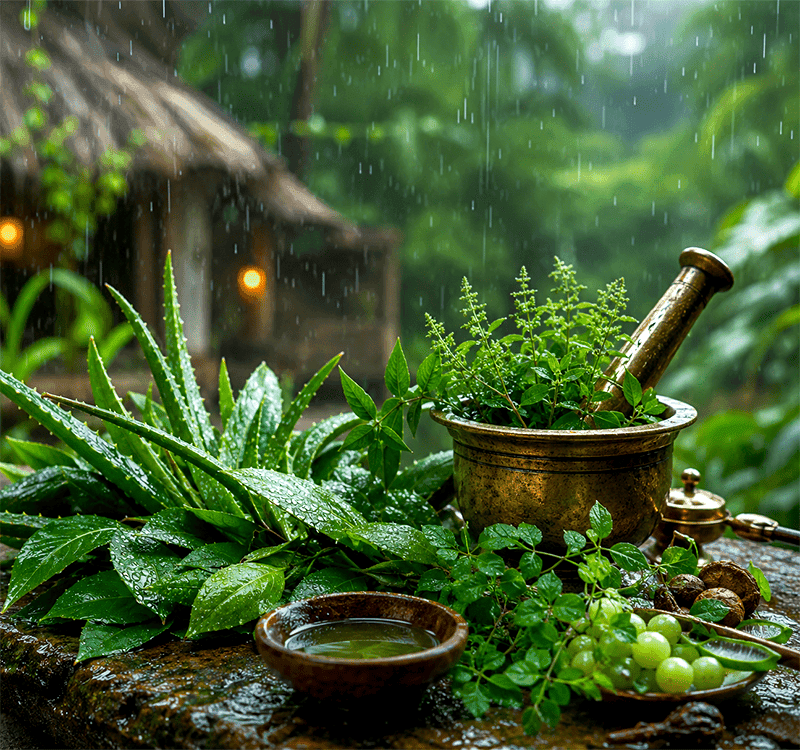
Ayurveda views the rainy season as the time when weather aggravates the vata dosha and disturbs the digestive fire. According to ayurveda, each season has specific qualities that influence our doshas - vata, pitta, and kapha. During the monsoon, the atmosphere becomes cool, damp, and windy. These qualities can easily disturb our internal balance and make us sick.
Table of Contents:
- Monsoon makes you sick not the rain
- Ayurveda saying about monsoon
- The herbs that helps in monsoon
- Ayurvedic practices that helps during monsoon
- Food that actually works
- Agni the whole story
- Conclusion
Monsoon makes you sick not the rain
Every monsoon the same thing happens to people around you.
The season changes and you must have noticed that within a few days someone gets a cold. Someone’s stomach is upset. Someone is just lying around feeling heavy and tired and they don’t even know why. And everyone just accepts it. Oh, it’s the season. It happens.
You rest for a few days, take medicines and feel better. But next season will change, and the same things start again. Many people think it is just normal.
What’s Really Going On
Your body likes a rhythm.
When the weather changes, everything outside also changes. Temperature drops or rises. The air becomes dry or humid. Mornings feel different from evenings. But most of us do not change how we live – We eat the same food at the same time and follow the same routine in every season.
The body tries hard to adjust to what’s happening outside. And when you do not give it any support inside, it struggles. That is when you fall sick.
Ayurveda calls the gap between two seasons – Sandhi Kaal. It just means the junction point or the transition point. It says the body is naturally more sensitive during the transition time. It is not weak. It is just more sensitive. There is a difference.
Ayurveda saying about monsoon
The monsoon season is known as the vata season in ayurveda.
Vata is basically the air energy inside the body. The vata controls the movement, digestion, nervous system and breathing.
The monsoon season — with its wind, temperature going up one hour and down the next this disturbed vata more than anything.
When Vata gets disturbed, the digestive fire becomes weak. Ayurveda calls this fire the Agni. And honestly this Agni is really important.
When the body is working the body processes the food. Absorbs the nutrients and throws out the waste. Everything is smooth when the agni is working.
When the Agni gets weak and it mainly gets weak during the monsoon season and the food does not get processed properly. It just sits inside the body. This is what Ayurveda refers to as Ama.
Agni and Ama are very important here. The Ama is basically the residue. It is the undigested stuff that accumulates inside the body.
This is where the sickness starts, not from the rain. From the Ama people get the heavy feeling during the monsoon, the bloating feeling, tired for no reason and the stomach that cannot decide what it wants. All of this is due to Ama. It is all because of the Agni. The Agni and the Ama are the reasons for these problems.
Other seasons have problems too but the monsoon season is different. The environment is really working against the body during the monsoon season. There is humidity everywhere. The air is carrying more bacteria than it usually does.
The body is already stressed trying to function in the monsoon season. Then in the monsoon season Agni drops on top of all that.
Most people have no idea what is going on because nobody explains the monsoon season this way. Ayurveda did not just notice that people fall sick during the monsoon season but it also understood the chain of events that happens during the monsoon season.
The Vata rises and the Agni drops during the monsoon season. The Ama builds up during the monsoon season. The body becomes vulnerable during the monsoon season. Then sickness follows during this season.
It is the chain of events that happens every year during the monsoon season. It is completely predictable what happens in this season.
The herbs that helps in monsoon
Ginger
In ayurvedic text ginger is called Vishwabhesaj which means Medicine for the whole world.
Fresh ginger during monsoon works directly on Agni. It is what the digestive system needs most during seasonal transition. When the temperature drops the digestive fire gets weakened, that's when ginger helps in reducing Ama.
Tulsi
Tulsi is Known as the Queen of Herbs. Ayurveda gives it this title and means it.
Monsoon air is damp and full of pathogens. Tulsi protects the respiratory tract from this. Clears the Kapha, the heavy wet energy from the chest and throat before it settles and causes problems. Also helps in calming vata and that unsettled anxious feeling that rainy weather gives a lot of people — Tulsi quietly addresses that and helps in it.
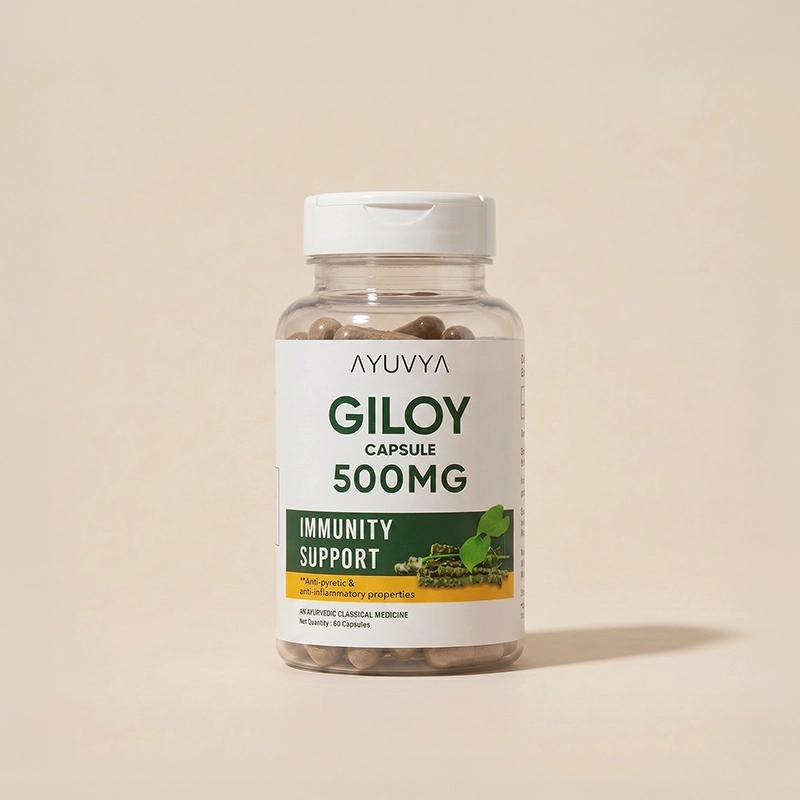
Giloy
Called Amrita in Ayurveda. Nectar of immortality.
Giloy is good during the monsoon, a transition period when the air is filled with bacteria and viruses. It helps in building immunity and providing strength to the body.
Neem
Bitter. Uncomfortably bitter honestly. But that’s the whole point.
Neem also known as a skin herb and it helps a lot during season changes. Pitta rises after monsoon and heat starts coming through skin and gut in which neem helps to clear it. It helps in purification internally.
Mulethi
It is known as Yasthimadhu.
It works on the throat and upper chest. When the monsoon gets cold and damp start settling there Mulethi coats and soothes those channels from inside. Clears the throat away and helps in clearing the respiratory tract infections.
Ayurvedic practices that helps during monsoon
The oil-massage
Massage warm sesame oil into the joints and limbs ten minutes before bathing. You can feel the difference within a week. Relief from pain and fatigue, joints become less rigid and Sleep will get better.
The oil penetrates and lubricates the joints, and the massage stimulates the circulation, so it works. The body contracts slightly in the cold damp air — blood flows, joints stiffen. Massage helps in this.
Warm water, just warm water.
This is probably the easiest change you can do. Cold water straight from the fridge or ice in drinks and eating leftover food cold and straight. All this monsoon is beating up your already slowed down digestion.
Change over to warm water. Drink it during the day. In a few days your gut will literally thank you, less bloating, less heaviness after eating, better appetite.
Steam when you feel congested
Head over a pot of hot water with a towel over you for five minutes. Or just sit in a steamy bathroom. This is old and simple and it works better than most things for chest and head congestion. If you add Tulsi leaves to the water it works even better.
Two drops of oil in the nose
This is the Ayurvedic practice called Nasya. Two drops of warm sesame oil in each nostril in the morning. What it does is it protects entry of airborne infections.
Food that actually works
This is where most of the work happens. What you eat in monsoon matters more than almost anything else because your digestion is the weakest.
It is going to be the basic principle: warm, freshly cooked, easy to digest. That's it.
Khichdi is genuinely one of the best monsoon foods, rice and lentils together, warming spices that are easy on the stomach, Dal with rice, and warm vegetable soups. These aren't boring choices, they're intelligent ones.
Things to actually avoid or reduce:
cold water and cold drinks, raw salads (especially from outside), street food during heavy rains (contamination risk is real), heavy fried food even though you'll want it
because cold weather makes you crave it, refrigerated leftover foods eaten cold, and curd at night specifically — Ayurveda is very specific about this one. Drink boiled or filtered water, every single day. This is not an option, Monsoon waterborne illness is not a small thing and it's completely avoidable.
Agni the whole story
In Ayurveda everything revolves around Agni during the monsoon.
Because Ayurveda does not believe that disease develops overnight. It gradually develops over time through repeated weakened Agni.
High humidity and weather changes causes pitta to accumulate leading to poor digestion, toxin (Ama) accumulation and poor digestion.
Conclusion
Monsoon is not a bad season. It is actually quite beautiful if the body is prepared for it. The problem is never the rain. It’s always the immunity and state of the body going into the season. Ayurveda just says — understand what this season demands. Prepare a little.
Use the right herbs to keep the Agni protected. The good thing about ayurveda is that it provides you with actual tools not just medicines, just habits and plants, that genuinely make that struggle smaller.