Below: what modern studies found, what Charaka and Sushruta said, exactly how long to walk, and a 7-day plan to make it stick.
What studies say about walking after meals
Two separate lines of research point the same way: move more, and move after you eat.
+2.53 mg/dL | average rise in HDL ("good") cholesterol with regular exercise |
120 min/week | the minimum amount of exercise that raised HDL |
2–5 min | of walking after a meal helped blood sugar |
1. Exercise raises good HDL cholesterol
A meta-analysis of exercise trials found that HDL cholesterol increased by an average of 2.53 mg/dL in the exercise groups. The minimum that made a difference was about 120 minutes a week, or roughly 900 calories burned. That works out to about 17 minutes a day, which is exactly what two short walks after lunch and dinner give you.
2. A short walk after eating steadies blood sugar
A 2022 review of seven studies in the journal Sports Medicine compared sitting, standing and light walking after meals. Researchers found that walking as little as 2 to 5 minutes after a meal helped. Standing lowered blood sugar by 9.51% compared with sitting, and light walking spread through the day lowered it by 17.01%. People who walked also had steadier insulin levels than those who stood or sat.
Why this matters for cholesterol: HDL is the cholesterol that helps clear the bad kind from your arteries, and it's one of the numbers you can push up yourself through regular exercise. The blood sugar benefit is a bonus, and important if you also watch your sugar.
What Ayurveda says: walk after eating, the Sushruta way
Long before glucose monitors, Ayurveda had a rule for after meals. Sushruta wrote:
"After meals, we should sit comfortably like a king and then have a short walk."
Sushruta Samhita
Many Indian families know this as shatapawali, "walking 100 steps" after a meal. The 100-step count is a household custom rather than a number from the classical texts, but the idea behind it is Sushruta's: rest briefly, then walk.
Charaka on exercise and excess fat
In his chapter on excess body fat (meda), Charaka names its causes plainly: a heavy, sweet, cold and fatty diet, lack of physical exercise and sleeping during the day (Charaka Sutra 21/4). For managing it, he prescribes vigil (staying awake rather than oversleeping), along with physical and mental exercise (Charaka Sutra 21/28).
Don't overdo it: exercise at half strength
Ayurveda doesn't ask you to exhaust yourself. Ashtanga Hridaya says even strong people should exercise at only half their strength (ardha shakti) in winter and spring, and less in other seasons (Ashtanga Hridaya Sutra 2/11). A gentle walk after eating fits this perfectly. A sprint does not.
How to increase HDL cholesterol with walking after meals
The exercise study found that about 120 minutes a week was the minimum that raised HDL. Here's how walking after meals gets you there without setting aside "exercise time":
Walk | Minutes | Per week |
|---|---|---|
After lunch | 10 | 70 |
After dinner | 10 | 70 |
Total | 20 a day | 140 minutes |
That's above the 120-minute minimum, from two walks you'd barely notice. If you also stop smoking, you add a second HDL boost: smoking lowers HDL, and quitting can help raise it again.
How long to walk after eating: the right way, step by step
- Sit first. Rest comfortably for a few minutes after your meal, as Sushruta advised. Don't lie down.
- Start soon. Blood sugar usually spikes within 60 to 90 minutes after eating, so it's best to get moving soon after your short rest.
- Walk 10 to 15 minutes. Even 2 to 5 minutes helped blood sugar in studies; 10 to 15 minutes after two meals gets you to the 120 minutes a week linked to higher HDL.
- Keep it easy. At half strength you should be able to talk comfortably while walking.
- Swap the nap. Charaka lists day sleep as a cause of excess meda. Replace the post-lunch nap with this walk.
No space to walk outside? Walk inside your home, on the terrace, or up and down the corridor. The studies measured light walking, not distance or location.
Walking after dinner benefits: why the evening walk matters most
Dinner is where most Indian families go wrong: it's late, it's heavy, and it's followed by the sofa. A trial of 20 healthy adults compared the same dinner eaten at 10 PM versus 6 PM. The late dinner led to higherblood sugar and less fat burning overnight.
Ayurveda agrees: dinner should ideally be eaten before sunset, "as the digestive fire becomes dormant once the sun sets". Eat early, eat light, then take your walk.
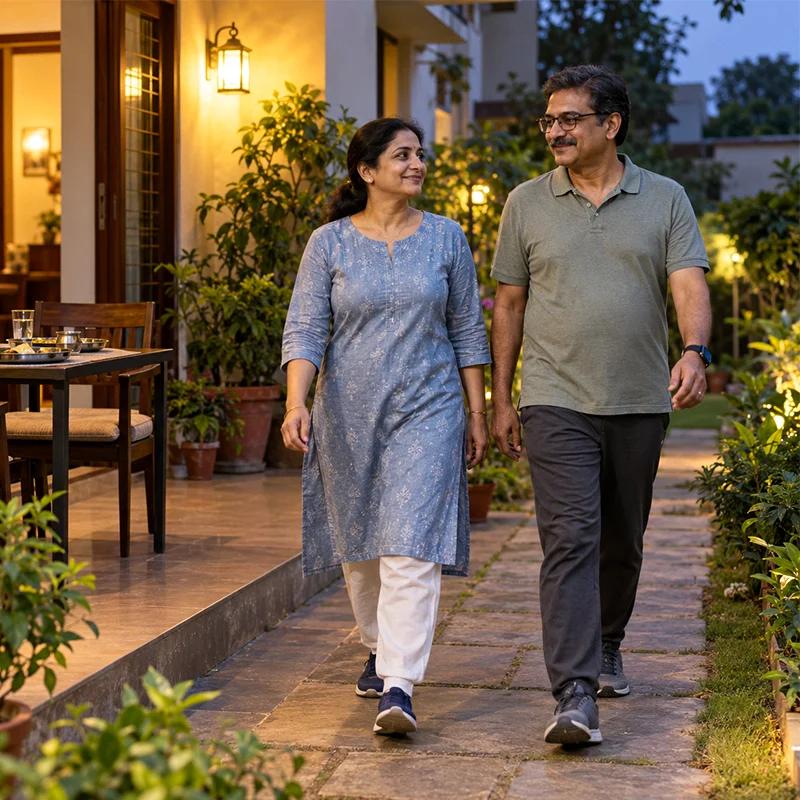
The ideal evening, in three steps: early dinner, a few minutes' rest, a 10 to 15 minute walk.
Your 7-day walking after meals plan
Start small and build. This plan reaches 140 minutes a week by day 7.
Day | After lunch | After dinner |
|---|---|---|
Day 1 | 5 min | 5 min |
Day 2 | 5 min | 5 min |
Day 3 | 5 min | 10 min |
Day 4 | 10 min | 10 min |
Day 5 | 10 min | 10 min |
Day 6 | 10 min | 10 min |
Day 7 onwards | 10 min | 10 min (stretch to 15 if comfortable) |
Make it stick: walk with a family member, or tie it to something you already do: walk to the end of the road and back every time you finish dinner.
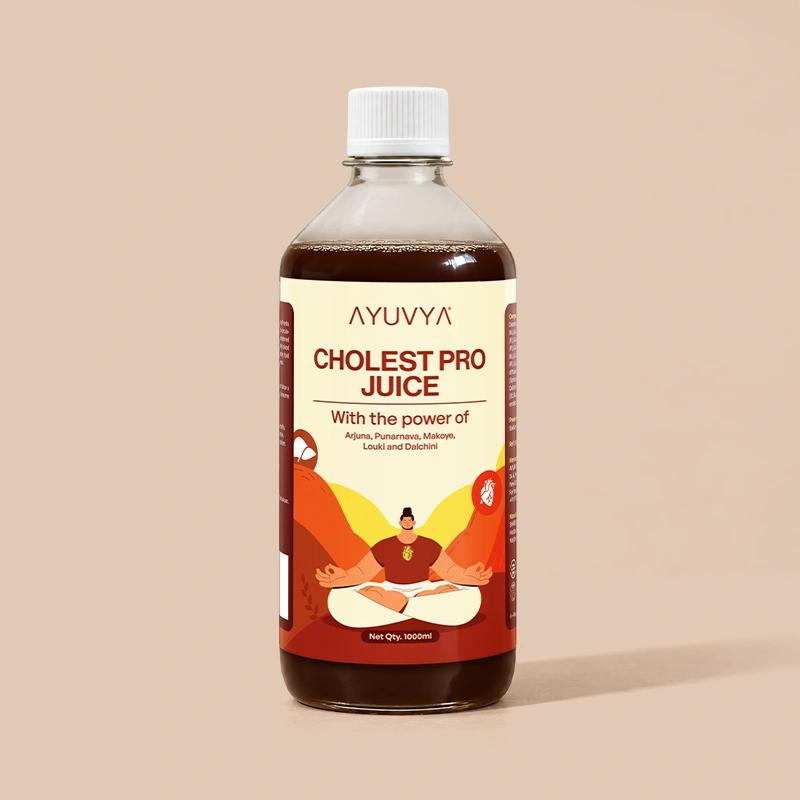
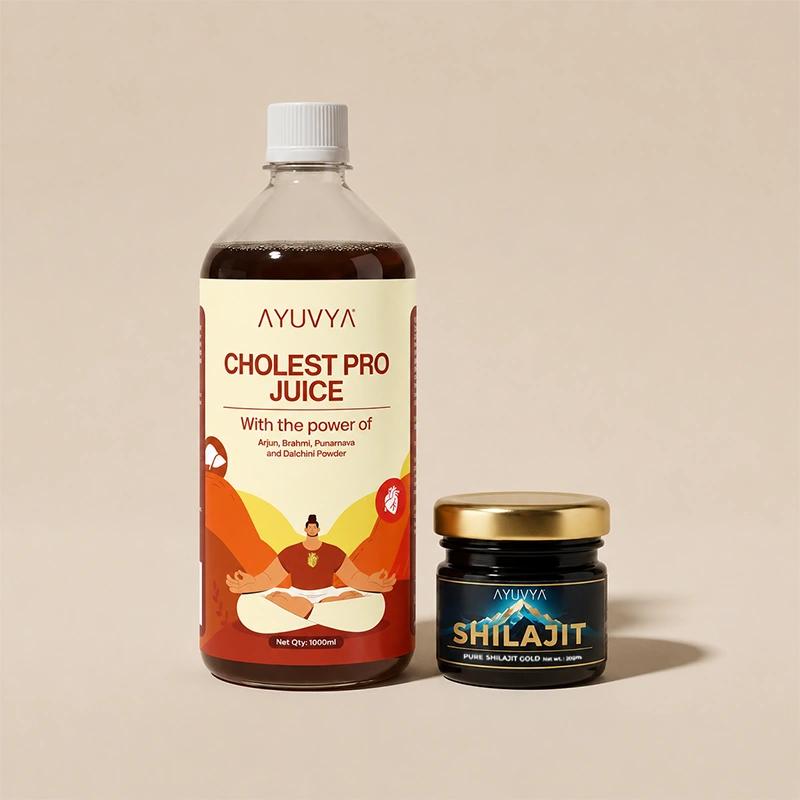
Walking after meals every day? Add daily support. Ayuvya Cholest Pro Juice is made for people working on healthy cholesterol levels. Make it part of the same daily routine as your walk.
Read next:
- 6 foods that lower cholesterol naturally
- Stop eating these 5 things at night
- 4 habits silently raising your cholesterol
This article is for general education and is not medical advice. Walking after meals supports healthy cholesterol and blood sugar as part of a healthy lifestyle; it does not diagnose, treat or cure any disease. If you have heart disease, joint problems or another medical condition, or you are pregnant, ask your doctor before starting a new exercise routine.
Sources
- Kodama S et al. Effect of aerobic exercise training on serum HDL cholesterol: a meta-analysis. Arch Intern Med, 2007 (reported by ScienceDaily)
- Buffey A et al. Light-intensity walking after meals and blood sugar: meta-analysis of seven studies. Sports Medicine, 2022 (reported by KSL)
- Gu C et al. Late dinner vs routine dinner: randomised crossover trial. J Clin Endocrinol Metab, 2020 (reported by HCPLive)
- NHLBI: Blood cholesterol, causes and risk factors
- Mayo Clinic: Top 5 lifestyle changes to improve your cholesterol
- Traditional methods of food habits and dietary preparations in Ayurveda. J Ethnic Foods, 2019
- Shatapawali (Wikipedia)
- Charaka Samhita, Sutra Sthana 21 (Ashtauninditiya Adhyaya)
- Ashtanga Hridaya, Sutra Sthana 2: Daily routine (Easy Ayurveda)