
Why milk and banana for weight gain is so popular
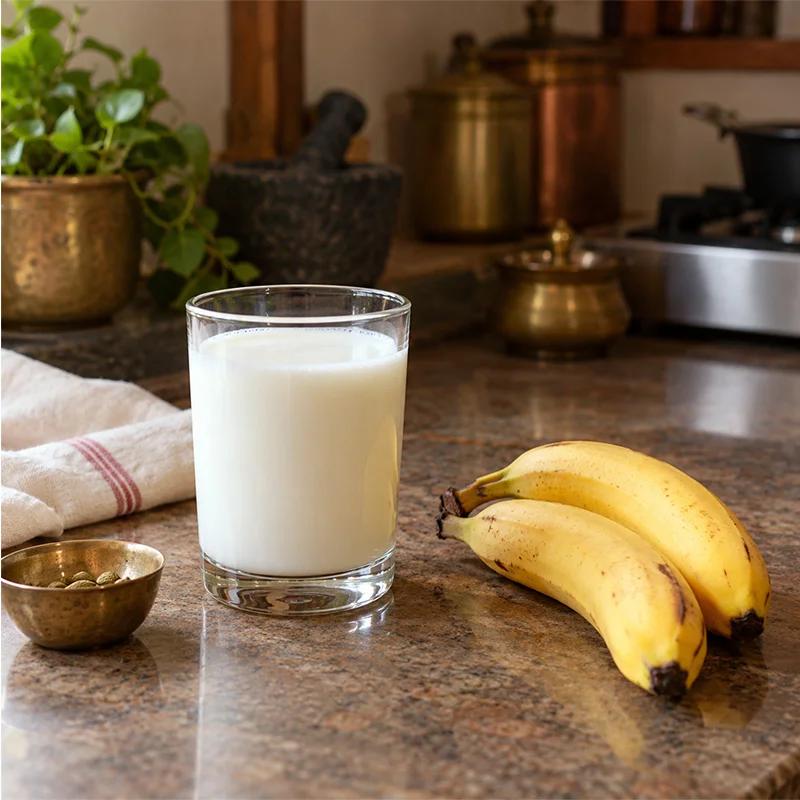
Because it works on paper. A medium banana gives about 105 calories, mostly carbohydrate. A cup of full-cream milk gives about 149 calories, with protein and fat. Together that is a 250-calorie snack that costs very little, needs no cooking, and goes down in two minutes. For a thin person with a small appetite, that is the whole game: energy in a small space, eaten between meals.
So nobody is wrong about the calories. The question is only about mixing.
Banana and milk in Ayurveda: the actual verse
Most articles say "Ayurveda says banana and milk are incompatible" and stop there. We went to the text.
Sushruta Samhita, Sutra Sthana, chapter 20 (Hitahitiya Adhyaya), verse 13: fruits of kadali (banana) and tala (palm) should not be taken along with milk, curds or buttermilk.
The same chapter, verse 8, says milk should not be combined with sour fruits, with jamun, and with curds. Verse 13 adds mango (amra) and radish to the list of things not to take with milk.
Charaka, Sutra Sthana 26 gives the general rule behind it: all sour things are incompatible with milk. The old books call such pairs viruddha, food that works against the body. They give the rule; they do not give a long explanation.
So it is not folklore. Banana with milk is a named pair in one of the three great books of Ayurveda, in the chapter on what is fit and unfit to eat. Note that the same verse also rules out the mango milkshake, and a later text, the Bhojanakutuhala, names banana with chaas as a bad pair too.
Is banana with milk bad? The modern view
A review by Healthline of the modern evidence found no studies showing that combining bananas and milk harms digestion or health. Its words: there is "no evidence to suggest that combining foods, such as bananas and milk, can interfere with digestion". It notes that the Ayurvedic view, that the pair weakens digestive fire, has not been tested in research, and that eating several servings of both daily "can add up in calories and may contribute to weight gain over time", which for our reader is the goal.
So the two views do not agree. Science says: no proof of harm. The old books say: do not mix. We will not pretend one of them does not exist.
Our honest verdict
We are an Ayurvedic brand. When the old books name a rule in plain words, we follow it, even where science has not found the harm. That is the standard we hold ourselves to on honey, on dahi at night, and on this.
The good news: you lose nothing by following the rule. The calories are in the banana and in the milk, not in the blender. Eat the banana at 11 am with peanuts. Drink the milk at 10 pm with dates. Same 250 calories, two snacks instead of one, and no argument with Sushruta.
If you still want the shake: that is your call, and the modern evidence says you will come to no harm. Just keep the added sugar out. A banana is already sweet, and added sugar pushes calories to the belly and triglycerides up.
How to have both, the right way
Both, every day. Never in the same glass.
Time | Have | Rule it keeps |
|---|---|---|
7:30 am | Glass of full-cream milk with breakfast (paratha, poha, idli) | Milk is first on Charaka's list for the thin |
11:00 am | 1 or 2 bananas with a handful of peanuts | Banana alone, no milk, no chaas |
1:00 pm | Lunch with dahi or chaas | Dahi in the daytime, an hour after the banana |
5:00 pm | Sattu in milk with a little jaggery | Jaggery preparations are on Charaka's list |
10:00 pm | Warm milk with 4 to 5 dates, or a spoon of ghee | Milk, dates, ghee: nothing sour, nothing from the fruit list |
Two bananas and three glasses of milk, every day, inside the rules. That is more than most banana-shake drinkers manage.
5 weight gain shakes at home that the old books allow
- Dates and milk. 4 to 5 soaked dates, deseeded, blended into a glass of warm milk. Sweet enough without sugar.
- Sattu milk. 2 to 3 tablespoons of sattu, a glass of milk, a little jaggery, a pinch of cardamom. Protein, energy, done in a minute.
- Almond milk, the Indian way. 8 to 10 soaked almonds, peeled and crushed, in warm milk with a pinch of saffron or cardamom.
- Ghee milk. A teaspoon of ghee in a glass of warm milk at night. Charaka calls ghee the best of fats; for the thin person, milk and ghee are his first two prescriptions.
- Turmeric milk. Warm milk, a pinch of turmeric, a little sugar. Not for calories so much as for the habit of a bedtime glass.
Three things that must not go in milk, by the old rules: honey in hot milk (honey is never heated), lemon or any sour fruit, and the fruits named in Sushruta's list: banana, mango, jamun. If a cafe menu says "mango-banana protein shake", that is three rules in one glass.
Milk and banana for weight gain: yes to both, no to the blender.
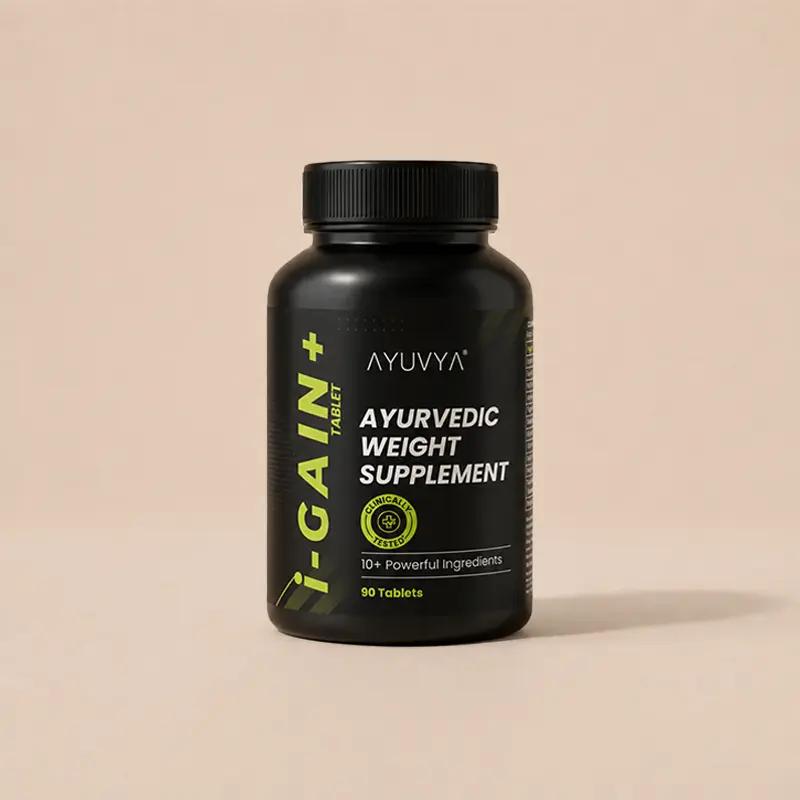
Build the day around five eating times and the shakes above. If appetite is what fails you, Ayuvya's i-Gain is made from Ayurvedic herbs for appetite and nourishment, with a diet chart that keeps every old rule on this page. See i-Gain, or start with the full Indian diet chart for weight gain.
This article is for general information. It is not medical advice. Calorie figures are standard values for a medium banana and a 237 ml cup of whole milk. The food advice here is for adults who are underweight; full-cream milk and daily shakes are not advice for people with high cholesterol or diabetes.
Sources
- Sushruta Samhita, Sutra Sthana, chapter 20 (Hitahitiya Adhyaya), verses 8 and 13: milk with sour fruits, jamun, curds; kadali and tala fruits with milk, curds or buttermilk; mango and radish with milk. English rendering at Easy Ayurveda. easyayurveda.com
- Charaka Samhita, Sutra Sthana 26 (sour substances with milk; honey never heated), Sutra Sthana 13 (ghee), Sutra Sthana 21 (milk and ghee for the thin). carakasamhitaonline.com
- Bhojanakutuhala (banana with takra as an incompatible pair).
- Healthline. Bananas with milk: review of the Ayurvedic claim and the modern evidence (105 kcal per medium banana; 149 kcal per cup of whole milk; no evidence of harm from the combination). healthline.com
- World Health Organization, 2015 sugars guideline (free sugars under 10%, ideally under 5%). who.int