
Here is what 10 trials found, what one Indian study saw over 3 years in people with prediabetes, the full Ayurveda description of methi, and how to take it safely.
Methi seeds for diabetes: what 10 trials found
In 2014, researchers pooled 10 trials of methi (fenugreek) in people with diabetes:
- Fasting blood sugar: down by about 17 mg/dL.
- 2-hour sugar after a glucose drink test: down by about 39 mg/dL.
- HbA1c: down by 0.85% (from 3 trials).
- Dose mattered: clear effects were seen only in studies using 5 g a day or more.
To understand those numbers, see HbA1c normal range: the 3 sugar numbers on your report.
Fenugreek for prediabetes: a 3-year Indian study
An Indian trial followed adults aged 30 to 70 with prediabetes for 3 years:
- What they took: 5 g of a processed methi fibre powder (bitterness and fat removed), twice a day (10 g a day), with 200 ml of water, half an hour before meals.
- Result: after 3 years, 23% of the methi group had developed diabetes. In the group that took nothing, it was 55%.
The ICMR-INDIAB survey found that 15.3% of Indians have prediabetes. That is why this study gets attention.
Infographic: 55% (no methi) vs 23% (methi group) developed diabetes over 3 years
The catch: what the studies cannot yet prove
- The authors of the 10-trial review said most of the trials were of low quality. They asked for better trials with a clear methi preparation and dose.
- The US National Center for Complementary and Integrative Health (NCCIH) says there is not enough good-quality proof yet to say whether methi helps in diabetes.
- The prediabetes study was a single trial. Its authors noted that some people skipped doses because of the taste.
Bottom line: methi is a promising support, with more research behind it than most kitchen remedies. It is not a replacement for the medicines your doctor gives you.
Methi dana benefits in Ayurveda: the full rule
The old Ayurveda text Raja Nighantu (chapter 6, verses 67–69) describes methi as:
- Pungent in taste and heating in nature
- Can worsen bleeding problems linked to heat (called raktapitta in the old books)
- Brings back the wish to eat and helps digestion
- Calms wind in the body (gas and bloating)
What this means: methi is a digestive spice that warms the body. So the same small, measured use that science supports also suits Ayurveda. But people who run hot, have acidity, or bleed easily should go easy.
An honest note: methi is not among the foods the old Ayurveda book of Charaka lists for prameha, the old name for sugar disease. That list is led by barley, old rice, moong and amla (see foods that increase blood sugar). Methi's place in this series comes from modern trials, not from Charaka.
How to take methi seeds for diabetes
- Talk to your doctor first if you take any diabetes medicine or insulin. Methi can add to their effect.
- Before meals, with water. In the Indian trial, a processed methi powder was taken with 200 ml of water, half an hour before meals.
- The trial dose was 5 g twice a day. In the review, effects appeared at 5 g a day or more. Start with less, and let your doctor guide the amount.
- Use it in food every day too. A methi tadka in dal or sabzi is the traditional way. But that is a much smaller amount than the trials used.
- Check your sugar. Test as your doctor advises when you start, so you can see how your body responds.
Methi water for diabetes: does soaking help?
Soaking methi dana overnight and drinking the water is a popular habit. But the trials we found used the seeds, or powders made from them. Not the soaking water alone. So we cannot say the water by itself does the same job. If you soak the seeds, eat the seeds too.
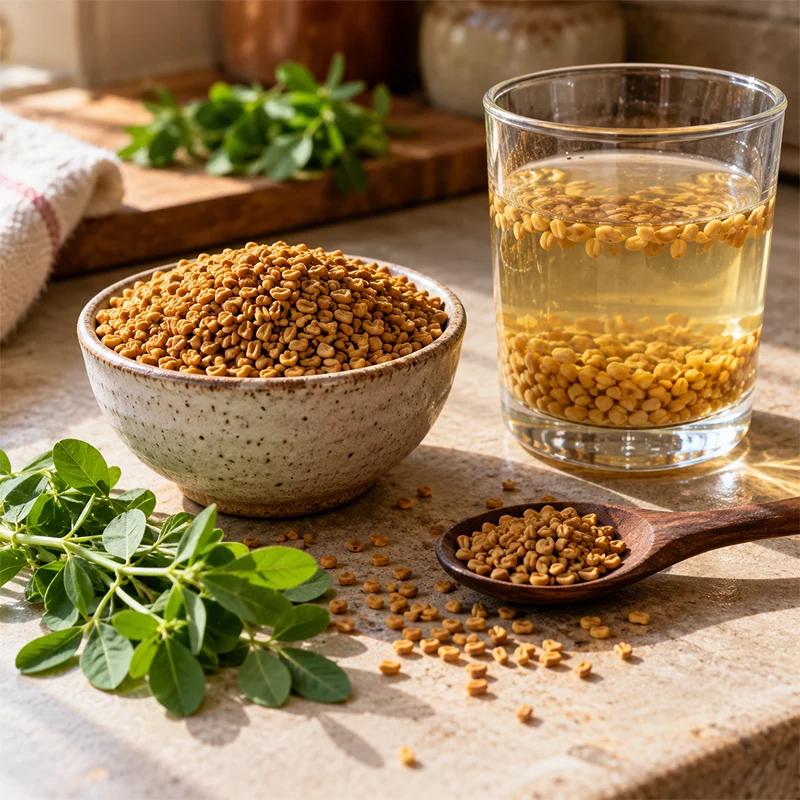
Image: methi powder and a glass of water on the table half an hour before lunch
Methi side effects and who should avoid it
- Stomach upset: loose motions, nausea and other stomach problems (NCCIH).
- Low sugar: large doses may lower blood sugar to a dangerous level (NCCIH), especially along with diabetes medicines.
- Allergy: methi can cause allergic reactions, some serious, in some people (NCCIH).
- Pregnancy: not safe in amounts above what is in food (NCCIH).
Ayurveda adds: methi is heating and can worsen bleeding problems linked to heat (Raja Nighantu). So people with bleeding problems or too much heat should ask an Ayurvedic doctor first.
Methi seeds for diabetes in one table
Question | Answer | Source |
|---|---|---|
Does it lower sugar? | Fasting −17 mg/dL, HbA1c −0.85% on average; mostly low-quality trials | Review of 10 trials, 2014 |
Prediabetes? | 23% vs 55% developed diabetes in 3 years, in one trial | Indian trial, 2015 |
Dose in studies | 5 g a day or more; 5 g twice a day before meals in the Indian trial | Both studies |
Ayurveda nature | Pungent, heating; helps digestion; calms wind; can worsen bleeding problems | Raja Nighantu, chapter 6 |
Avoid or ask first | Pregnancy, allergy, diabetes medicines, bleeding problems | NCCIH; Raja Nighantu |
Printable card: methi seeds for diabetes, do this and not that
Adding methi seeds for diabetes to your routine? Add daily support too.
Ayuvya Diabo is made for people who want healthy sugar levels. See Diabo. Take it along with your doctor's medicine, not instead of it.
Read next:
- Walking after meals for blood sugar: the 10-minute rule
- Foods that increase blood sugar: the list Charaka wrote
- HbA1c normal range: the 3 sugar numbers on your report
Frequently asked questions
Do methi seeds for diabetes really work?
A 2014 pooled review of 10 trials found methi lowered fasting blood sugar by about 17 mg/dL, 2-hour sugar by about 39 mg/dL, and HbA1c by 0.85%. The effects were seen at 5 g a day or more. But most trials were of low quality, and the US NCCIH says there is not yet enough good-quality proof. So methi supports treatment. It does not replace it.
How to take methi seeds for diabetes?
In a 3-year Indian prediabetes trial, people took 5 g of a processed methi powder twice a day, with 200 ml of water, half an hour before meals. In the review of 10 trials, effects were seen at 5 g a day or more. If you take diabetes medicines, ask your doctor first. Large amounts can lower sugar too far.
Can methi prevent diabetes in prediabetes?
In one Indian trial of people with prediabetes, 23% of those taking 10 g of methi powder a day developed diabetes over 3 years, compared with 55% of those who did not. It was a single study with some weak points. So it is promising, but not proof.
What are methi side effects?
The US NCCIH lists loose motions, nausea and other stomach problems, allergy in some people, and dangerously low blood sugar with large doses. It is not safe in pregnancy in amounts above what is in food. In Ayurveda, methi is heating and can worsen bleeding problems linked to heat. So people who bleed easily or run hot should be careful.
This article is for general information. It is not medical advice. Methi supports healthy blood sugar as part of a balanced diet; it does not treat or cure any disease. If you have diabetes, take medicines or insulin, have a bleeding problem or allergy, or are pregnant or breastfeeding, ask your doctor before taking methi in more than food amounts. Do not stop or change any medicine based on this article.
Sources
- Neelakantan N and colleagues. Effect of fenugreek intake on glycemia: a meta-analysis of clinical trials. Nutrition Journal, 2014
- Gaddam A and colleagues. Role of fenugreek in the prevention of type 2 diabetes mellitus in prediabetes. J Diabetes Metab Disord, 2015
- US National Center for Complementary and Integrative Health: Fenugreek
- Methi in Raja Nighantu 6/67–69, Wisdomlib
- Charaka Samhita, Chikitsa Sthana 6 (Prameha Chikitsa)
- Lessons learnt from the ICMR-INDIAB study (Anjana RM and colleagues, Lancet Diabetes Endocrinol, 2023). National Medical Journal of India