
The one rule for picking foods for weight gain
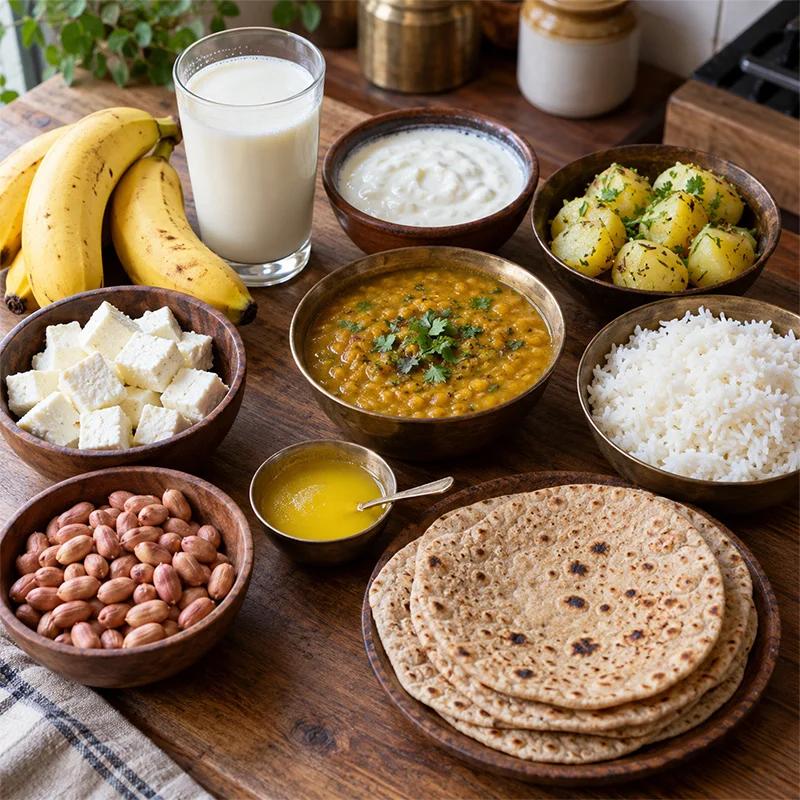
A thin person has a small stomach and a small appetite. So the food has to carry a lot of energy in a small space, and it has to be something you will eat five times a day for months. Fat does the first job: gram for gram, fat gives more than twice the energy of rice or roti. Habit does the second: if it is not in your kitchen already, you will stop in two weeks.
Charaka's list for the thin person (Sutra Sthana 21): milk, ghee, dahi, shali rice, masha (urad), wheat, sugarcane, jaggery preparations, newly harvested grains. And his first cause of thinness: dry, non-oily food. Keep both in mind as you read.
The 10 foods
1. Ghee for weight gain: the first spoon
Ghee is almost pure fat. One tablespoon on dal and one on rice adds a lot of energy without adding a single extra bite, which matters when you cannot eat more. Charaka calls ghee the best of all fats (Sutra Sthana 13) and lists it in the diet for the thin. The same chapter says ghee is not for people with too much body fat, so this is advice for the underweight only.
How: 1 tablespoon on lunch rice, 1 on dinner dal, a little in the morning paratha. Start with 2 spoons a day and build up.
2. Full-cream milk, twice a day
Milk is the first word on Charaka's list. For the thin person, buy the full-cream packet (6% fat by Indian standards), the opposite of our cholesterol advice. Two glasses a day: one with breakfast, one warm before bed.
Old rule: never with sour things. No sour fruit, no lemon, no tomato in the same glass or the same meal.
3. Banana for weight gain: the free snack
About 89 calories per 100 g, mostly carbohydrate, with potassium. Cheap, no cooking, no peeling tools. The thin person's problem is the gap between meals; a banana fills the gap at 11 am and 5 pm.
How: 1 or 2 bananas a day with a handful of peanuts. Old rule: banana and chaas are a bad pair in the old books; keep them an hour apart.
4. Dates (khajoor)
About 280 calories per 100 g, mostly natural sugar with fibre. Four or five dates with a glass of milk is a 300-calorie snack that takes one minute. Dates are a sweet, so count them as your sweet of the day.
How: 4 to 5 dates mid-morning, with milk. Not after a heavy dinner.
5. Peanuts (moongphali)
About 570 calories per 100 g, with about 25 g of protein and 48 g of fat. A handful of roasted peanuts is the cheapest protein-plus-fat snack in India. Into the poha, into the chikki, into the pocket.
How: a handful (about 30 g) once or twice a day. Roasted, not fried in a packet with salt and masala.
6. Urad dal (masha)
Charaka names masha, urad, in the nourishing diet for the thin. It is the heaviest and most filling of the common dals. Rice with urad dal and ghee at dinner is the oldest weight-gain meal in India. Idli and dosa batter is urad too.
How: a katori of urad dal with rice and ghee, 3 or 4 nights a week. If your digestion is weak, start with moong and move to urad.
7. Rice (chawal)
Shali rice is on Charaka's list. Rice is soft, easy to digest, and easy to eat more of than roti. For the thin person, rice at lunch and dinner is a feature, not a problem. Old rice is lighter; new rice is heavier and more nourishing, which is what you want here.
How: a full katori at lunch and dinner, always with dal and ghee. Not plain.
8. Potato (aloo)
Not on the old lists (the potato came to India later), but it does the job: filling, cheap, and it carries ghee or oil well. Aloo paratha, aloo-matar, potato sandwich, aloo in the poha.
How: once a day, cooked in ghee or oil, not deep fried as chips.
9. Paneer
Protein and fat together, from milk. For a thin person, full-fat paneer is fine. ICMR-NIN's protein figure for adults is 0.83 g per kg a day, about 54 g for a 65 kg man; a katori of paneer goes a long way toward it, with dal and milk doing the rest.
How: 100 g (a small block), 3 to 4 times a week, as bhurji, in sabzi or in a paratha.
10. Sattu
Roasted chana flour. Mix it in water or milk with a little jaggery, and you have a drink that is filling, high in protein and takes a minute. Jaggery preparations are on Charaka's list; sattu is the Bihar way to do it.
How: 2 to 3 tablespoons in a glass of milk or water, mid-morning or evening. Sweet version with jaggery; or salty with cumin and lemon, in water only, never lemon in milk.
All 10 in one table
Save it. Stick it on the fridge.
Food | How much | When | In the old books? |
|---|---|---|---|
Ghee | 2 to 3 tablespoons a day | Lunch and dinner | Yes, best of fats |
Full-cream milk | 2 glasses | Breakfast, bedtime | Yes, first on the list |
Banana | 1 to 2 | Mid-morning, evening | No; not with chaas |
Dates | 4 to 5 | Mid-morning with milk | No; counts as your sweet |
Peanuts | A handful, 1 to 2 times | With banana, in poha | No |
Urad dal | A katori | Dinner, 3 to 4 nights | Yes, masha |
Rice | A full katori | Lunch and dinner | Yes, shali |
Potato | 1 serving | Any meal | No |
Paneer | 100 g | 3 to 4 times a week | No (milk and dahi are) |
Sattu | 2 to 3 tablespoons | Mid-morning or evening | Jaggery preparations are |
Put these into the five eating times in our Indian diet chart for weight gain, and you have a plan.
5 "weight gain foods" that are not
- Cake, cold drinks, chocolate. The UK health service's advice for underweight adults, word for word: "do not rely on chocolate, cakes and sugary drinks to gain weight". Sugar makes a belly, not a body, and pushes triglycerides up.
- Protein powder. ICMR-NIN's 2024 guidelines said most people do not need protein supplements. Dal, milk, paneer, peanuts and sattu cover it, at a fraction of the price.
- Packet chips and namkeen. Energy, yes. Also salt, bad oil and no protein. You will feel full and have built nothing.
- Honey in hot milk. People add honey "for weight". Charaka says honey must never be heated or taken with hot things. If you want sweet milk, use a little sugar or jaggery.
- A giant dinner. One huge plate at 10 pm is not a weight-gain food, it is indigestion. Five medium meals beat one big one.
Ten foods for weight gain, all already in your kitchen. The hard part is eating them five times a day.
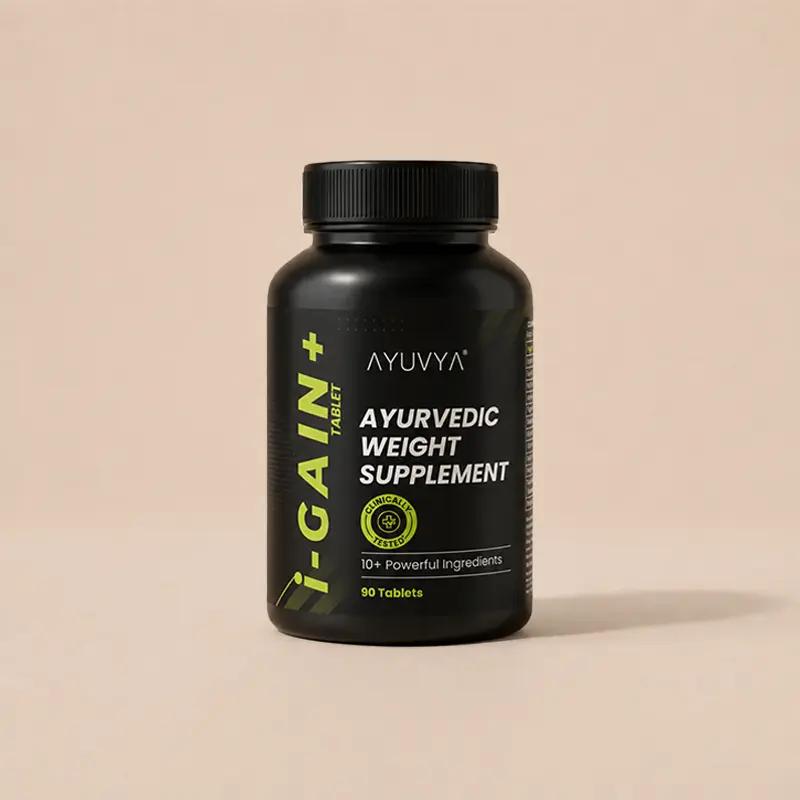
If appetite is what stops you, Ayuvya's i-Gain is made from Ayurvedic herbs for appetite and nourishment, and comes with a diet chart built on exactly these ten foods. See i-Gain. And if you are losing weight without trying, read why am I not gaining weight first.
This article is for general information. It is not medical advice. These foods are for adults who are underweight and otherwise healthy; several of them (ghee, full-cream milk, full-fat paneer) are the opposite of what we advise for people with high cholesterol or diabetes. If you are losing weight without trying, see a doctor first.
Sources
- Charaka Samhita, Sutra Sthana 21 (nourishing diet for the thin: milk, ghee, dahi, shali rice, masha, wheat, sugarcane, jaggery preparations), Sutra Sthana 13 (ghee the best of fats; not for the heavy body), Sutra Sthana 26 (honey never heated; sour with milk). carakasamhitaonline.com
- ICMR-NIN. Nutrient Requirements for Indians, 2020: protein RDA 0.83 g/kg (54 g for a 65 kg man). nin.res.in
- ICMR-NIN Dietary Guidelines for Indians 2024, as reported by South First (no protein supplements for most people). thesouthfirst.com
- NHS (UK). Advice for underweight adults ("do not rely on chocolate, cakes and sugary drinks to gain weight"). nhs.uk
- Food values per 100 g (banana 89 kcal; dates 280 kcal; peanuts 570 kcal, 25 g protein, 48 g fat), from the nutrition tables on Wikipedia, which draw on the USDA food database. Banana, Dates, Peanut
- Department of Consumer Affairs, Government of India. Milk standards (full cream 6% fat). consumeraffairs.nic.in
- Bhojanakutuhala (banana with takra as an incompatible pair).