The verse: piles removed by takra do not grow back
Ashtanga Hridaya, Chikitsa Sthana, chapter 8 (on piles), verse 42: piles uprooted with takra do not grow back. The verse adds a picture: takra poured on the ground burns even the grass, so what it uproots stays uprooted.
Verses 43–44: takra clears the body's channels, so the nourishing fluid reaches the tissues, giving strength and good colour; it is said to cure hundreds of disorders of the dry and heavy kinds.
Charaka, Chikitsa Sthana 14 (on piles): lists buttermilk, with curd, soft cooked grains and leafy vegetables, among the foods for constipated bowels. His definition of takra elsewhere: curd churned with four parts water.
That is a strong claim, in plain words, from one of the three main books of Ayurveda. Every Ayurvedic college teaches it. It is why your grandmother put a glass of chaas next to the thali, and why this blog exists.
Why chaas, and not dahi or milk
Chaas is dahi with the fat churned out and water added. What is left is light, mostly water, with the sourness and the good bacteria of dahi but almost none of its heaviness. The old books treat the three as different foods:
Milk | Dahi | Chaas (takra) | |
|---|---|---|---|
Weight on digestion | Heavy | Heavy; Charaka says only mixed, daytime, never heated | Light; the Ashtanga Hridaya allows it daily |
Water | Some | Little | Four parts water to one of dahi |
Fat | In the milk | In the dahi | Churned out as butter |
In the piles chapters | Not named as a treatment | Curd-rice for bleeding piles (Charaka) | Named as the thing that uproots piles (Ashtanga Hridaya 8/42) |
And one thing from the first blog: Charaka's root cause of piles is weak digestion and constipation. Chaas is the one dairy food the old books call light enough to take every day without loading digestion, and it adds water to the stool at the same time.
How to make chaas for piles
- Start with fresh dahi, set the same morning from toned milk. Not sour, two-day-old dahi. Charaka names "immature curds", the half-set kind, among the causes of piles, so let it set fully.
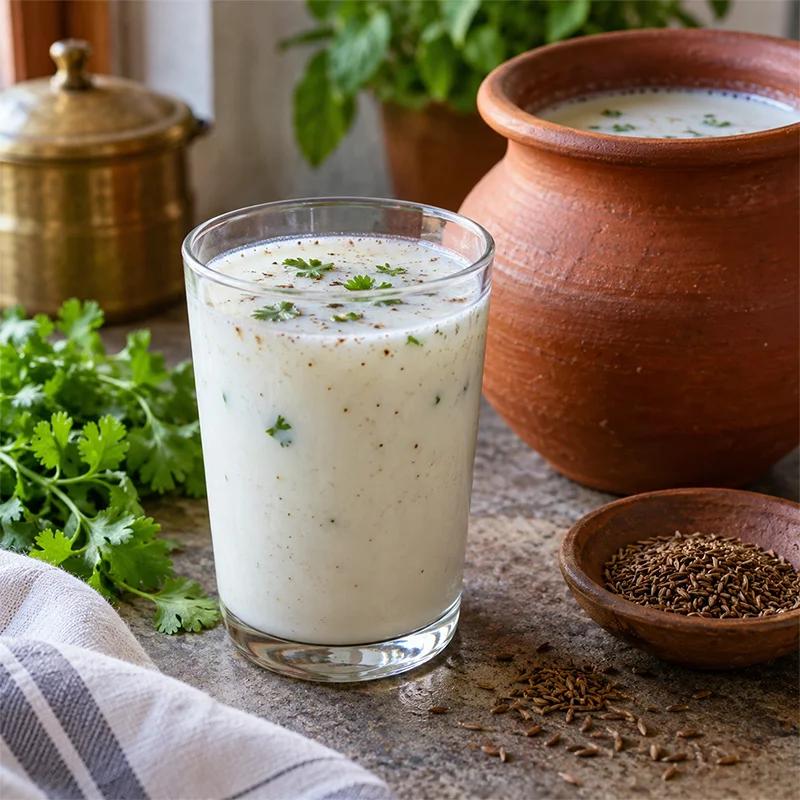
- One part dahi, four parts water. That is Charaka's definition of takra. If you want it a little richer, two or three parts water; never thick like lassi.
- Churn well, with a mathani or a hand blender. If butter rises, take it off. The Ashtanga Hridaya (8/41) says takra can be fat-free, half-fat or full-fat, chosen for the person. For piles, go thin and fat-free.
- Add a pinch of rock salt and roasted cumin. The college review of takra lists "takra with salt" as the piles prescription, and cumin with salt as the usual addition.
- Serve at room temperature. Not ice cold, not heated.
Not with banana. The Bhojanakutuhala lists banana with takra as a bad pair. And no mango or sour fruit in the same meal as any dairy.
Buttermilk for piles: how much, how long
Ashtanga Hridaya 8/37: takra may be drunk daily, as much as is wanted, sometimes without food; for very weak digestion, takra alone is preferred. 8/38: the length of the course is the doctor's call: seven days, ten days, half a month, or a month. 8/40: rice taken with takra and ghee, with takra as the drink after.
A safe home version of that:
- One glass with lunch, every day, for a month. Then keep it as a habit.
- With the meal or just after, not an hour before on an empty stomach, not at night.
- Dahi-chawal at lunch on some days, which Charaka names for bleeding piles, with chaas after.
- Watch your body. The old books say season and strength decide the course. If you feel burning, very thirsty or giddy, stop and ask an Ayurvedic doctor.
Who should not drink buttermilk
From the college review of the old books, takra is not advised for people with: burning in the body, great thirst, giddiness or fainting, weakness and exhaustion, bleeding disorders, and low reproductive tissue. It is said to be unsuitable in the hot seasons (peak summer and the hot weeks after the rains), and in hot, acidic conditions.
Two more from us: if your piles are bleeding and you feel weak or short of breath, see a doctor before any home course; that can be low blood. And people told to limit salt should use very little in the chaas.
The honest note on proof
We looked for a modern clinical trial of buttermilk in people with piles. We did not find one. So the case for chaas rests on three things: the verses above, which are clear and old; the fact that chaas fits the soft-stool diet that the UK health service and the old books both prescribe for piles; and two thousand years of Indian lunches. That is a strong tradition and a sound logic, not a trial. We say so, and we still put the glass next to the thali.
Buttermilk for piles: one part dahi, four parts water, a pinch of salt and cumin, one glass with lunch, every day.
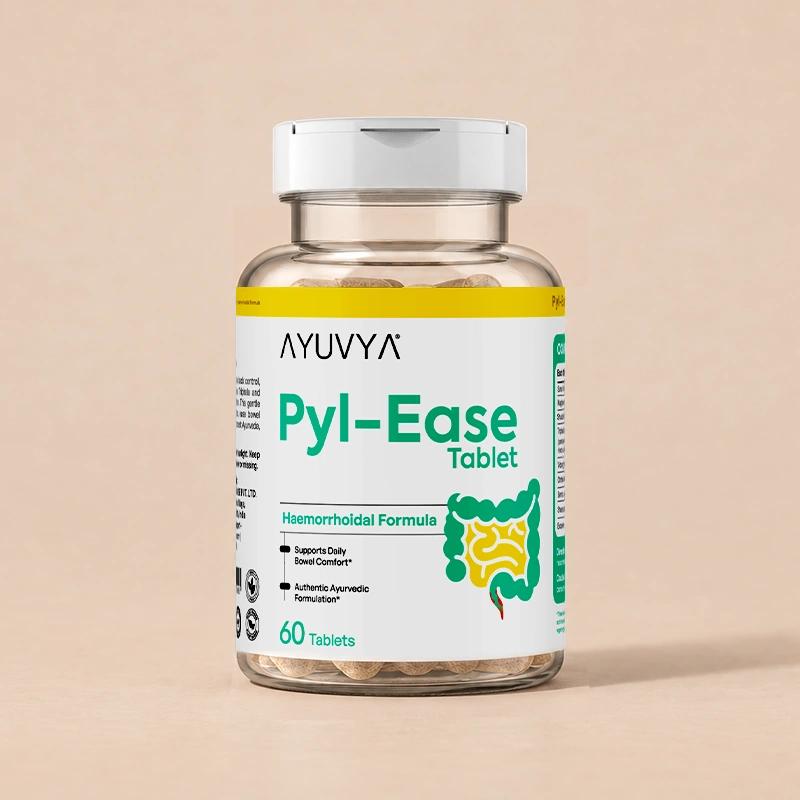
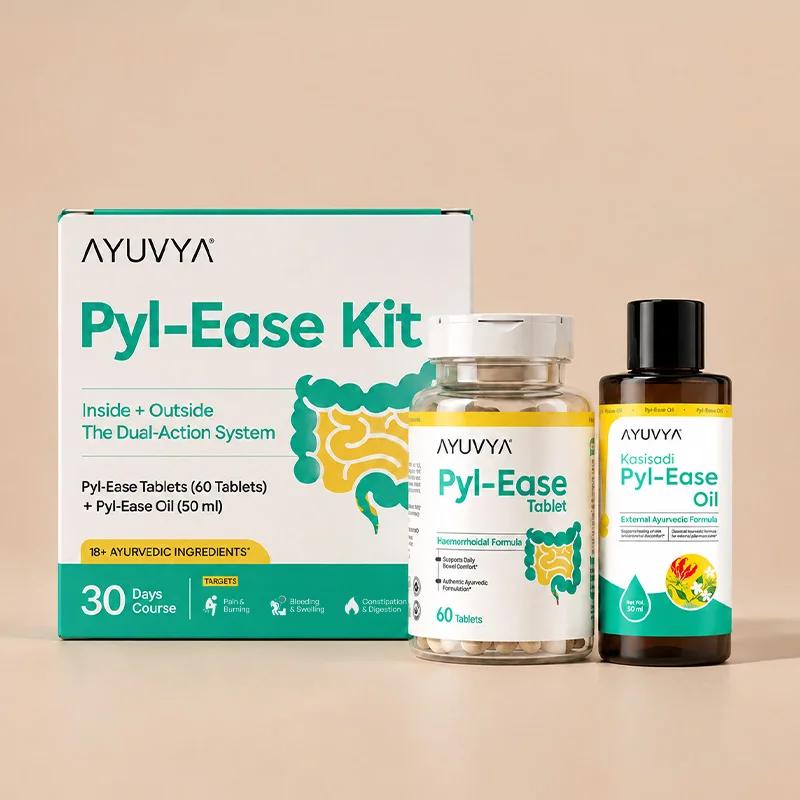
Ayuvya's Pyl Ease is made from Ayurvedic herbs to support people with piles, and comes with a piles diet chart that has the chaas rule in it. See Pyl Ease, or read the full piles diet chart.
This article is for general information. It is not medical advice. The claims about takra are from classical Ayurvedic texts, as stated; we found no modern clinical trial on buttermilk and piles. Bleeding with weakness, dark blood, weight loss or a change in bowel habit needs a doctor.
Sources
- Ashtanga Hridaya, Chikitsa Sthana, chapter 8 (Arshasam Chikitsitam): verses 37, 38, 40, 41, 42, 43–44 on takra. English rendering at Easy Ayurveda. easyayurveda.com
- Charaka Samhita, Chikitsa Sthana, chapter 14 (Arsha Chikitsa): buttermilk among foods for constipated bowels; curd-rice for bleeding piles; immature curd among causes. carakasamhitaonline.com
- JSS Ayurveda College. "Better Living through Buttermilk": classical definition of takra (curd with four parts water, after Charaka), takra with salt for arsha, course lengths, seasonal advice, and who should not take takra. jssayurvedacollege.org
- Charaka Samhita, Sutra Sthana 7 (dahi rules). carakasamhitaonline.com
- Bhojanakutuhala (banana with takra as an incompatible pair).