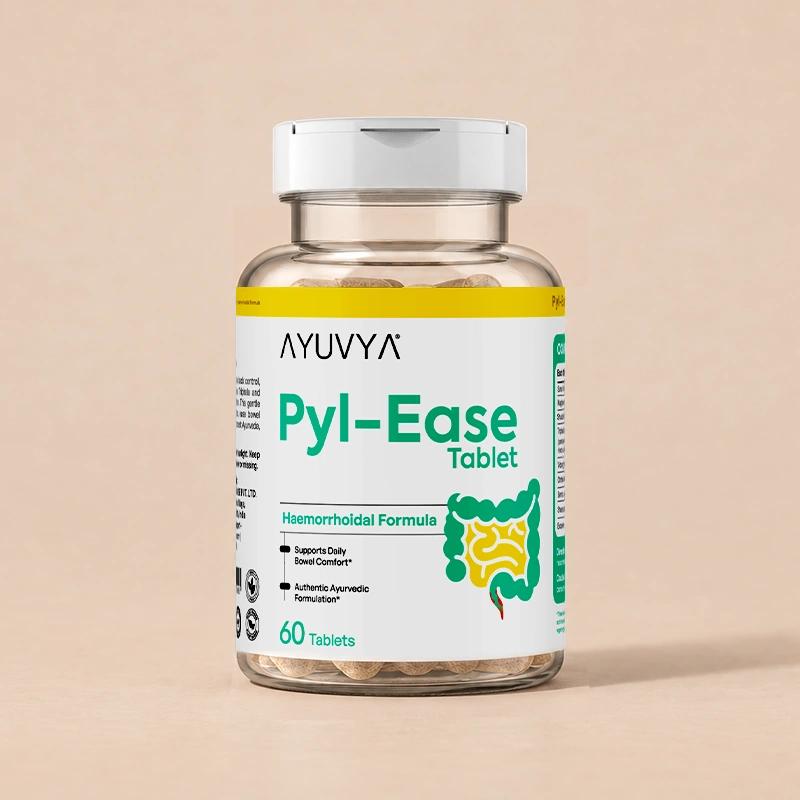
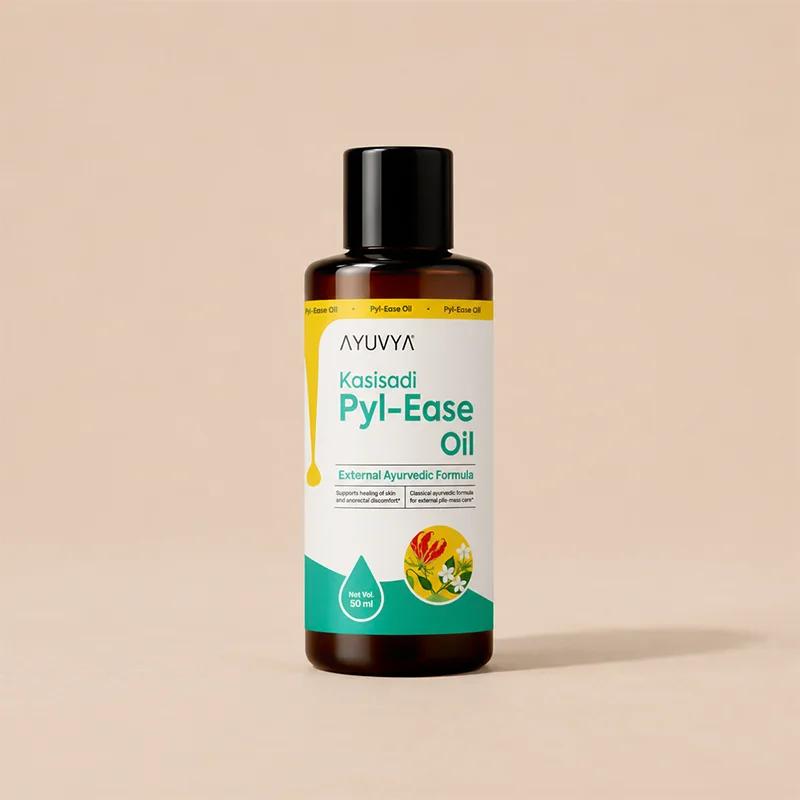

Piles can make everyday activities, including sitting and passing stools, uncomfortable. The name of ayurvedic medicine for piles often depends on whether someone experiences constipation, itching, swelling, or discomfort. At Ayuvya, the Pyl-Ease range brings together Ayurvedic tablets and topical oils for a considered piles-care routine. Understanding the ingredients and formulations is the first step towards choosing wisely.
What Are Piles and Why Do They Occur?
Piles, medically known as haemorrhoids, are swollen veins in and around the lower rectum and anus. They can develop when pressure builds up in these blood vessels, often due to repeated straining during bowel movements. Understanding what causes piles can help identify common contributing factors and the lifestyle habits associated with this condition.
Common factors that contribute to piles include:
- Chronic constipation and hard stools.
- Spending too much time sitting on the toilet.
- A diet low in dietary fibre.
- Insufficient water intake.
- Pregnancy and increased pressure around the rectal area.
- Prolonged sitting and limited physical activity.
Common Symptoms of Piles
The symptoms can differ depending on the location and severity of the condition. Some common signs include:
- Itching and irritation around the anus.
- Pain or discomfort while passing stools.
- Swelling or a lump near the anal opening.
- Bright red bleeding during bowel movements.
- A feeling of incomplete bowel evacuation.
Internal piles may cause painless bleeding, while external piles can cause itching, swelling, and discomfort. Persistent bleeding should always receive medical attention rather than being automatically attributed to piles.
Different Grades of Piles
Piles are generally classified into four grades:
- Grade 1: Swollen veins remain inside the rectum.
- Grade 2: Piles may protrude during bowel movements but return on their own.
- Grade 3: Protruding piles may need to be pushed back manually.
- Grade 4: Piles remain outside and cannot be pushed back easily.
Understanding the grade helps determine which treatment or medical procedure may be appropriate.
What Is the Name of Ayurvedic Medicine for Piles?
When researching the name of ayurvedic medicine for piles, it is important to understand that Ayurvedic care includes different ingredients and formulations rather than one universal remedy.
Some commonly used Ayurvedic ingredients include:
1. Triphala
Triphala combines three fruits: Amla, Haritaki, and Bibhitaki. It is traditionally used to support digestive health and bowel regularity. Ayuvya Triphala Capsules offer this traditional combination in a convenient capsule format.
2. Nagkesar
Nagkesar is a traditional Ayurvedic ingredient used in different herbal formulations. It is included in Ayuvya Pyl-Ease Tablets as part of its multi-ingredient formulation.
3. Suran
Suran, also known as elephant foot yam, has a place in traditional Ayurvedic preparations. It is one of the ingredients included in Ayuvya Pyl-Ease Tablets.
4. Chitrak
Chitrak is traditionally used in Ayurvedic preparations, particularly those associated with digestive health. It is also included in the Pyl-Ease Tablets formulation.
5. Neem
Neem is widely used in traditional Ayurvedic skincare and topical preparations. It is one of the herbal ingredients associated with external-care formulations.
6. Haldi (Turmeric)
Haldi is traditionally valued for its use in Ayurvedic preparations. It appears in various herbal formulations intended for external wellness.
7. Lodhra
Lodhra is a traditional Ayurvedic herb used in different preparations for skin and tissue care.
8. Jati
Jati, commonly associated with jasmine, is used in traditional Ayurvedic topical formulations.
9. Kasisadi-Based Formulations
Kasisadi is a traditional Ayurvedic formulation category used in external-care preparations. Ayuvya Kasisadi Pyl-Ease Oil belongs to this category.
10. Jatyadi-Based Formulations
Jatyadi is another traditional Ayurvedic formulation used for external application. Ayuvya Jatyadi Oil contains ingredients such as Jati, Neem, Lodhra, and Haldi.
These ingredients have traditional Ayurvedic applications, but their inclusion does not establish that they independently cure piles. The suitability of a formulation depends on its ingredients, preparation, intended use, and individual health needs.
Ayurvedic Medicine for Piles Uses: Understanding Different Formulations
Different products serve different purposes. Understanding their formats helps when comparing Ayurvedic medicine for piles names and their intended uses.
Ayurvedic Tablets for Internal Care
Oral formulations are designed to be taken according to their product-specific instructions. Ayuvya Pyl-Ease Tablets contain Nagkesar, Triphala, Suran, and Chitrak.
They are positioned within Ayuvya's internal piles-care range. Their suitability should be discussed with a qualified healthcare professional, particularly if symptoms include bleeding or persistent pain.
Ayurvedic Oils for External Application
Topical oils are formulated for external application and should be used only as directed.
Ayuvya offers two relevant options:
- Kasisadi Pyl-Ease Oil: A traditional Kasisadi-based topical formulation.
- Jatyadi Oil: A herbal oil featuring ingredients such as Neem, Lodhra, Jati, and Haldi.
Always follow the product label and avoid applying topical products internally unless specifically directed.
Combination Piles-Care Kits
For people exploring different product formats, Ayuvya Pyl-Ease Kit combines Pyl-Ease Tablets and topical oil. The range is positioned for Grade 1 and Grade 2 piles.
A combination kit does not replace an individual medical assessment. The appropriate approach depends on the condition and symptoms.
Digestive-Support Products
Constipation and straining can aggravate piles. Supporting regular bowel habits is therefore an important part of everyday care.
Ayuvya also offers:
- Triphala Capsules: Contain the traditional three-fruit Triphala combination.
- Gut Hax: A digestive-support product positioned around concerns such as bloating and constipation.
These products complement general digestive wellness but should not be considered substitutes for piles treatment.
Which Is the Best Ayurvedic Medicine for Piles?
There is no single best Ayurvedic medicine for piles that works equally well for everyone. The right choice depends on the type of piles, symptoms, severity, medical history, and individual suitability.
When comparing a good ayurvedic medicine for piles, consider these factors:
- Ingredients: Check the complete ingredient list and potential allergens.
- Formulation: Understand whether the product is an oral tablet or an external oil.
- Product instructions: Follow the recommended dosage and application directions.
- Quality: Look for transparent manufacturing and quality information.
- Medical guidance: Consult a qualified practitioner before starting treatment.
Ayuvya Pyl-Ease Tablets and Pyl-Ease Oil offer different product formats within the same piles-care range. The Pyl-Ease Kit combines both formats for people exploring a coordinated routine.
The most effective ayurvedic medicine for piles cannot be identified by its name alone. Persistent bleeding, severe pain, or advanced piles may require medical treatment beyond herbal products.
How to Choose the Right Ayurvedic Medicine for Piles
Before selecting a product, consider the following:
- Understand your symptoms: Itching, swelling, constipation, and bleeding can have different underlying causes.
- Identify the condition: Internal and external piles may require different approaches.
- Review the ingredients: Check the formulation and possible interactions with existing medicines.
- Read usage instructions: Never increase the recommended dosage or apply an oil in an unintended area.
- Seek professional advice: A healthcare professional can help assess the condition and recommend appropriate treatment.
Avoid choosing products solely because they appear on a top 10 ayurvedic medicine for piles list. A popular ingredient or formulation may not be suitable for every person.
Diet and Lifestyle Changes That Support Piles Care
Alongside appropriate treatment, everyday habits can help reduce constipation and straining.
Consider these simple changes:
- Eat more fibre: Include vegetables, fruits, oats, and whole grains.
- Drink enough water: Maintain adequate hydration throughout the day.
- Stay active: Walking and gentle physical activity can support bowel regularity.
- Avoid straining: Do not force bowel movements.
- Respond to natural urges: Avoid regularly delaying trips to the toilet.
- Limit prolonged sitting: Take short movement breaks throughout the day.
A consistent routine is more helpful than relying on a single product or making temporary dietary changes.
When Should You Consult a Doctor for Piles?
Medical evaluation is important when symptoms persist, become severe, or return frequently.
Consult a healthcare professional if you experience:
- Repeated rectal bleeding.
- Severe pain around the anus.
- A painful or persistent lump.
- Symptoms that do not improve.
- Changes in bowel habits.
- Dizziness or weakness alongside bleeding.
Rectal bleeding can have causes other than piles, so an accurate diagnosis is essential. Advanced piles may require procedures such as rubber band ligation or surgery, depending on the clinical assessment.
Explore Ayurvedic Piles Care with Ayuvya
Managing piles involves more than choosing a medicine. Understanding the condition, maintaining healthy bowel habits, and selecting suitable products are all important parts of a considered care routine.
At Ayuvya, the Pyl-Ease range brings together Ayurvedic tablets, topical oils, and combination kits. From Pyl-Ease Tablets to Kasisadi Pyl-Ease Oil and Jatyadi Oil, each product offers a different formulation and intended use.
If you are exploring Ayurvedic medicine for piles, take time to understand the ingredients, product instructions, and your individual requirements before making a choice.
Explore theAyuvya Piles Care Collection and discover the Pyl-Ease range for your wellness needs.