

How much protein per day for weight gain
ICMR-NIN 2020, the official Indian figure: adults need 0.83 g of protein per kg of body weight a day. For the reference 65 kg man that is 54 g; for the reference 55 kg woman, 46 g. Multiply your own weight by 0.83 for your number. A 50 kg thin man needs about 42 g; a 45 kg woman about 37 g.
Two things to know about that number. First, it is for a healthy adult of normal activity. If you are thin and starting strength exercise to build muscle, treat it as the floor, not the ceiling. Second, protein alone does not make weight. A thin person needs calories too, and food that brings both is the point of this article.
High protein Indian foods: the real numbers
These are from the Indian Food Composition Tables 2017, published by ICMR-NIN, which measured Indian foods in Indian labs. Values are per 100 g of the raw, dry food, which is how the tables list them.
Protein per 100 g, raw (IFCT 2017)
Food | Protein (g) | Energy (kcal) | Fat (g) |
|---|---|---|---|
Soya bean | 36 to 38 | 377 to 381 | 19 to 20 |
Lentil (masoor) dal | 24.4 | 322 | 0.8 |
Moong (green gram) dal | 23.9 | 326 | 1.4 |
Peanuts (groundnut) | 23.7 | 520 | 39.6 |
Urad (black gram) dal | 23.1 | 324 | 1.7 |
Arhar (red gram / tur) dal | 21.7 | 331 | 1.6 |
Chana (Bengal gram) dal | 21.6 | 329 | 5.3 |
Rajma | 19 to 20 | 298 to 299 | 1.6 to 1.8 |
Paneer | 18.9 | 258 | 14.8 |
Cashew | 18.8 | 583 | 45.2 |
Whole chana (for sattu) | 18.8 | 287 | 5.1 |
Almond | 18.4 | 609 | 58.5 |
Wheat atta | 10.6 | 320 | 1.5 |
Rice, raw milled | 7.9 | 356 | 0.5 |
Buffalo milk, per 100 ml | 3.7 | 107 | 6.6 |
Cow milk, per 100 ml | 3.3 | 73 | 4.5 |
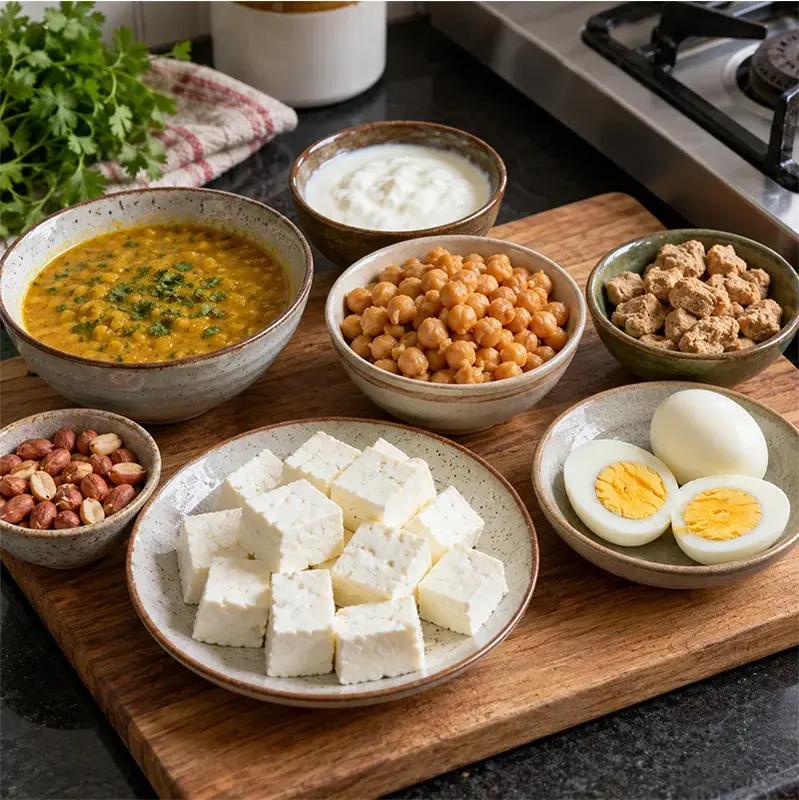
Three things jump out. Soya is in a class of its own. The dals are all close to each other, around 22 to 24 g, so pick by taste and digestion, not by protein. And peanuts, cashew and paneer bring a lot of fat with their protein, which for a thin person is a bonus, not a problem.
Protein for weight gain, per katori and glass
Nobody eats 100 g of dry dal. Here is what a normal serving gives, using the table above and ordinary kitchen amounts (a katori of cooked dal uses about 30 g of dry dal; a glass of milk is 250 ml):
Serving | Protein, about |
|---|---|
1 katori cooked dal (30 g dry) | 7 g |
1 glass cow milk (250 ml) | 8 g |
1 glass buffalo milk (250 ml) | 9 g |
100 g paneer (a small block) | 19 g |
A handful of peanuts (30 g) | 7 g |
50 g soya chunks, dry | 18 g |
2 to 3 tablespoons sattu (30 g) | 6 g |
2 rotis (60 g atta) | 6 g |
1 katori rice (50 g raw) | 4 g |
10 almonds (about 12 g) | 2 g |
Notice rice and roti. People forget that grains carry protein too. Two rotis and a katori of rice are 10 g between them, and they are on the plate anyway.
A day that passes 60 g without a powder
Ordinary food. Sixty grams. No tub.
Meal | Food | Protein, about |
|---|---|---|
Breakfast | 2 parathas, a glass of milk | 14 g |
Mid-morning | Banana and a handful of peanuts | 8 g |
Lunch | Katori of dal, katori of rice, 2 rotis, a katori of dahi | 20 g |
Evening | Sattu in milk | 14 g |
Dinner | Rice, urad dal, sabzi | 11 g |
Bedtime | Warm milk | 8 g |
Total | about 75 g |
That is well past the 54 g floor for a 65 kg man, and nothing on the list is unusual. Add paneer or soya chunks at dinner three times a week and you are comfortably above it even on days you skip a snack. This is the same day as our Indian diet chart for weight gain, with the protein counted.
The pairing trick. Dal and grain eaten together make a better protein than either alone, which is why dal-chawal, dal-roti, idli-sambar and khichdi have been the Indian meal for a very long time. Keep them together on the plate.
Protein powder vs food
ICMR-NIN 2024 guidelines said plainly that most people do not need protein supplements. The UK health service's advice for underweight adults says to add protein from "beans, pulses" and similar foods, with no mention of powder.
The thin person's problem with powder is not that it is poison. It is three smaller things:
- It replaces a meal. A shake at 11 am, no snack. Total food goes down.
- It brings protein without much else. A scoop in water is protein and little more. A katori of chana dal with ghee brings energy, fibre and minerals along with its protein.
- It is one more thing to buy, when the kitchen already has dal, peanuts and milk.
If you already have a tub, drink it after food, in milk, not instead of food, in water.
What the old books say
The old books do not have the word protein. But look at Charaka's nourishing diet for the thin person (Sutra Sthana 21): milk, dahi, ghee, shali rice, masha. Masha is urad dal, at 23 g of protein per 100 g the heaviest and most nourishing of the common dals. Milk and dahi are there too. The list was written for building the body, and it reaches the same foods the tables point to.
Rules that still apply: dahi in the daytime, never at night, never heated. Milk never with sour things. And for weak digestion, the lighter dals first: moong, then masoor, then urad.
3 protein mistakes thin people make
- Protein without calories. Boiled chana, "clean" plates, no ghee, no rice. You hit the protein and miss the weight. For a thin person, the ghee and the rice are the point.
- Too much dal too fast. Doubling dal overnight gives gas and a sore stomach, and you stop. Soak dals, cook them soft, add ghee, and go up one katori at a time.
- Counting the shake and skipping the plate. Covered above. Food first, shake after, or no shake.
Protein for weight gain is dal, milk, paneer and peanuts, five times a day. The tub can stay on the shelf.
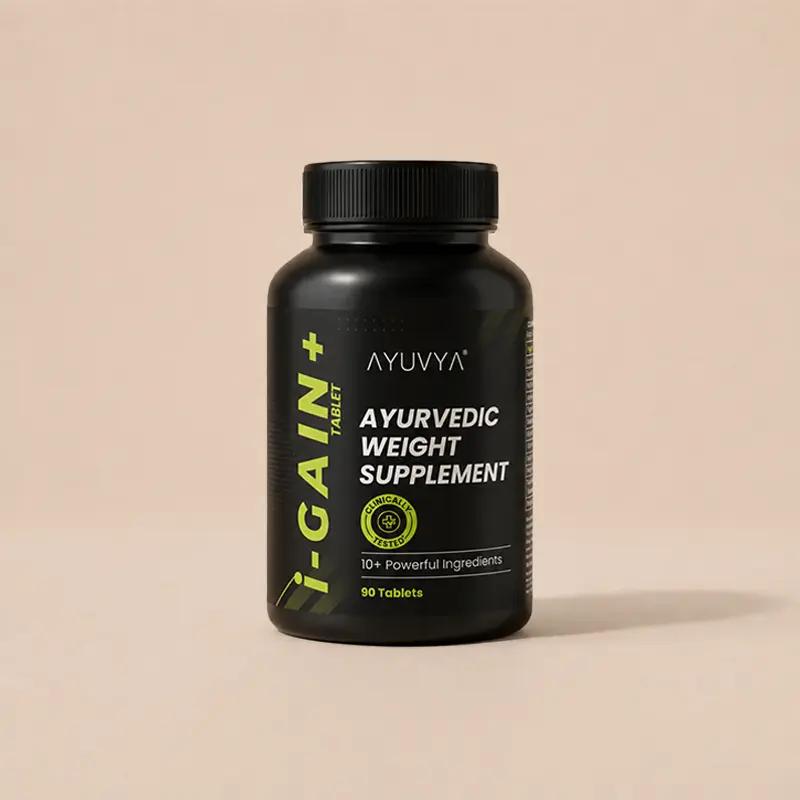
If appetite is what keeps you from the five meals, Ayuvya's i-Gain is made from Ayurvedic herbs for appetite and nourishment, with a diet chart that has the protein already counted. See i-Gain, or see the 10 foods for weight gain list.
This article is for general information. It is not medical advice. Food values are per 100 g raw from IFCT 2017, converted from kJ to kcal; serving figures use ordinary kitchen amounts stated in the text and are rounded. People with kidney disease should ask a doctor before raising protein intake.
Sources
- ICMR-NIN. Nutrient Requirements for Indians, 2020: brief note (protein EAR 0.66 and RDA 0.83 g/kg/day; 54.0 g for a 65 kg man, 45.7 g for a 55 kg woman). nin.res.in
- Longvah T and colleagues. Indian Food Composition Tables 2017. ICMR-National Institute of Nutrition, Hyderabad (protein, energy and fat per 100 g for the foods listed). nin.res.in
- ICMR-NIN Dietary Guidelines for Indians 2024, as reported by South First (no protein supplements for most people). thesouthfirst.com
- NHS (UK). Advice for underweight adults (protein from beans, pulses and other foods). nhs.uk
- Charaka Samhita, Sutra Sthana 21 (nourishing diet for the thin: milk, dahi, ghee, shali rice, masha), Sutra Sthana 7 (dahi) and 26 (milk with sour foods). carakasamhitaonline.com