Piles symptoms: the 5 signs
From the UK health service's page on piles:
- "bright red blood after you poo"
- "an itchy anus"
- a feeling that you still need to go after using the toilet
- slimy mucus in your underwear or on the toilet paper
- lumps or pain around the anus
Two things to notice. First, the blood is bright red, on the paper or on the stool, not mixed through it and not dark. Second, piles are often not painful. Many people have bleeding piles for months with no pain at all, and that is the usual way they are found.
Inside piles and outside piles
Piles are swollen blood vessels, like soft cushions, at the end of the passage. Where the cushion is decides what you feel.
- Inside the passage: you cannot see or feel them. They bleed, bright red, with little or no pain.
- Near the opening: a lump you can feel. It can itch, ache, or hurt.
Both are piles. Both come from the same causes: hard stool and pressure. Our first blog, what causes piles, goes through them.
Piles vs fissure: the pain tells you
Image: piles vs fissure pain pattern: piles little or no pain; fissure sharp pain when going, burning for hours after
If going to the toilet feels like passing glass, think fissure, not piles.
The UK health service: "An anal fissure is a small tear in your anus that causes pain when you poo." Signs: "severe, sharp pain when you poo", "burning pain after you poo that may last for several hours", and "bright red blood in the toilet or on the toilet paper after you poo".
So the blood looks the same. The pain does not.
- Piles: blood, maybe a lump, maybe an ache. Going to the toilet is not the worst part of the day.
- Fissure: going to the toilet is the worst part of the day. A sharp cut-like pain at the moment of passing, then burning for hours. People start fearing the toilet and holding the urge, which makes the stool harder, which tears the fissure again.
The good news: at the start, both are treated at home the same way. The UK page for fissures says: drink plenty of fluids and eat enough fibre to keep stools soft; sit in a warm, shallow bath after going; keep the area clean and dry; do not ignore the urge to go. Paracetamol for the pain. If it is "getting worse" or there is "no improvement after 7 days of treating it yourself", see a doctor.
Fistula symptoms: pus and a tunnel
The UK health service: an anal fistula is "a small tunnel that develops between the end of the bowel and the skin" near the anus, usually after an abscess, which is a boil full of pus. Signs: "skin irritation around the anus"; "a constant, throbbing pain that may be worse when you sit down", move, go to the toilet or cough; smelly discharge; passing pus or blood when you go; and "a high temperature if you also have an abscess".
And the line that matters most: "Anal fistulas usually require surgery as they rarely heal if left untreated."
This is the one people waste the most time on. A fistula does not get better with creams, fibre or home remedies. If there is pus, a constant throbbing pain, or a boil near the anus that keeps coming back, that is not piles. See a doctor; the UK page says a GP may send you to a bowel surgeon. The sooner, the smaller the operation.
All three in one table
Piles | Fissure | Fistula | |
|---|---|---|---|
What it is | Swollen blood vessels | A small tear in the skin | A tunnel from bowel to skin |
Blood | Bright red, on paper or stool | Bright red, on paper or in the toilet | Blood or pus when going |
Pain | Often none; ache or lump | Severe, sharp when going; burning for hours after | Constant throbbing, worse sitting |
Other signs | Itching, mucus, "not finished" feeling | Fear of the toilet | Smelly discharge, skin irritation, fever with abscess |
Home care helps? | Yes, in most cases | Yes, at first | No; usually needs surgery |
See a doctor | Worse, or no better in 7 days | Worse, or no better in 7 days | As soon as you suspect it |
What the old book says about the signs
The old books call piles arsha, and Charaka gives them a whole chapter (Chikitsa Sthana 14). He sorts them into three kinds by what brought them on: the dry kind (dry food, fasting, cold, too much exercise, grief), the hot kind (chilli, salty and hot food, alcohol, heat, anger) and the heavy kind (sweet, oily, heavy food, no exercise, day sleep, too much sitting). Each kind has its own signs and its own treatment in the chapter.
Two things from it matter here. First, the old book already treats bleeding piles as a separate case, with its own food advice: curd-and-rice dishes and buttermilk, which we cover later in this series. Second, it ties the signs back to the habits. The modern page tells you what you feel. The old book tells you why, and what to stop.
Blood in stool: when to worry
Most bleeding from the bottom is piles. But "most" is not "all", and the other causes matter more. The UK health service lists these among the symptoms of bowel cancer:
- "changes in your poo, such as having softer poo, diarrhoea or constipation that is not usual for you"
- "needing to poo more or less often than is usual for you"
- "blood in your poo, which may look red or black"
- "bleeding from your bottom"
- "often feeling like you need to poo, even if you've just been to the toilet"
- "tummy pain", "a lump in your tummy", "bloating"
- "losing weight without trying"
- "feeling very tired or short of breath", which can be signs of low blood (anaemia)
Its advice: "See a GP if you have any symptoms of bowel cancer." Urgent if your stool is "black or dark red" or you have "bloody diarrhoea". Emergency if you are "bleeding non-stop from your bottom", or "there's a lot of blood or you see large blood clots".
Notice how much of that list overlaps with piles: bleeding, the "not finished" feeling. That is exactly why a doctor should look once. The check is quick and usually ends with "it is piles". Our rule from us, not from the page: if you are over 40 and bleeding for the first time, or bleeding comes with any of the lines above, get checked before you buy anything.
Piles symptoms: bright red blood, itching, a lump, little pain. Sharp pain means fissure. Pus means fistula. Weight loss or dark blood means a doctor, now.
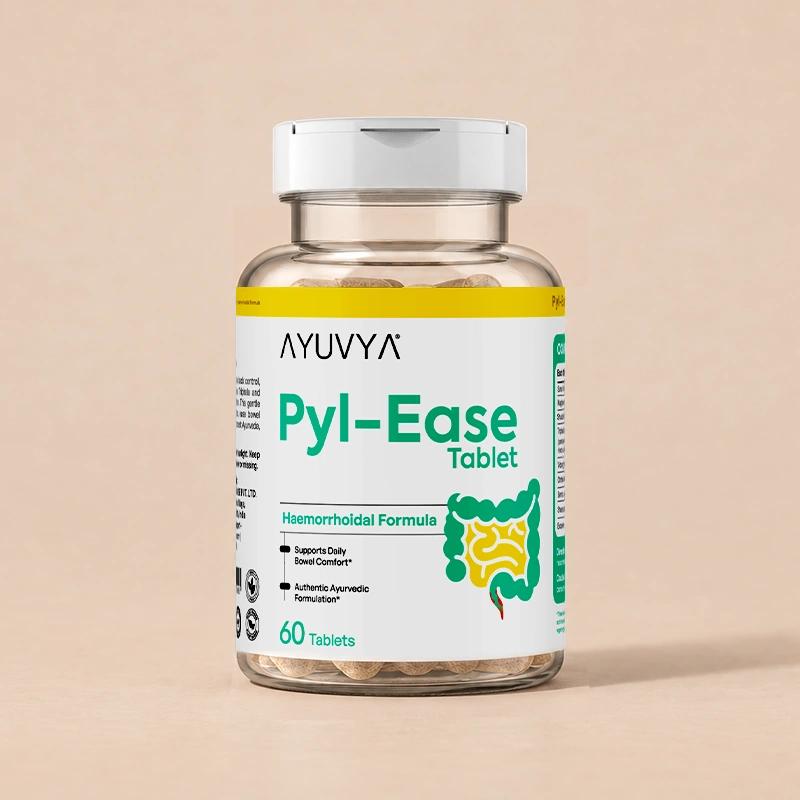
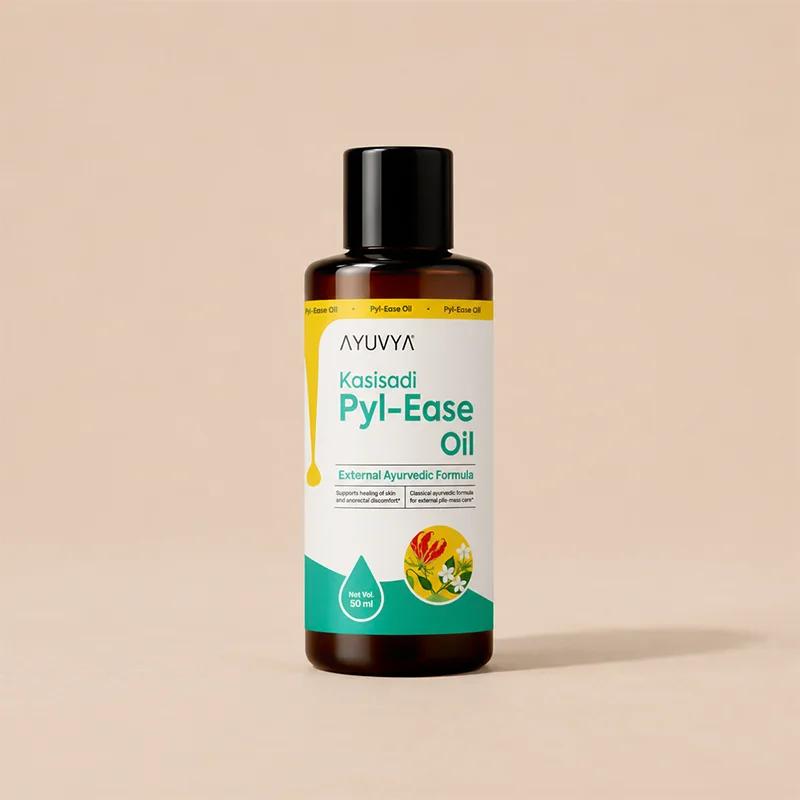
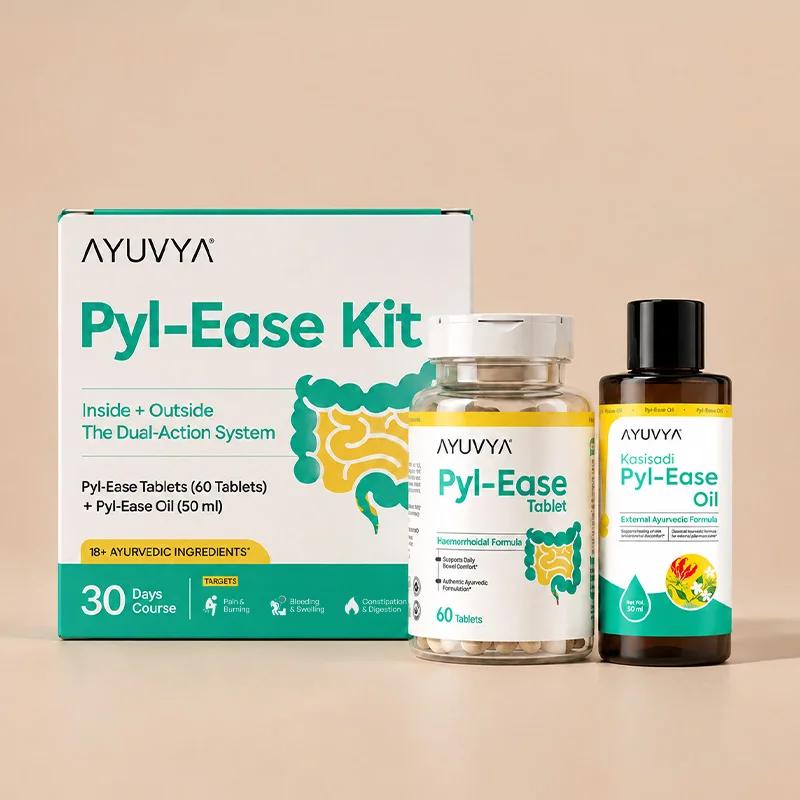
If it is piles, the fix starts with soft stool and no straining. Ayuvya's Pyl Ease is made from Ayurvedic herbs to support people with piles, and comes with a simple piles diet chart. See Pyl Ease. If you have any of the warning signs above, see a doctor first.
This article is for general information. It is not medical advice and cannot tell you what you have. Only an examination can. If you have bleeding with weight loss, dark or black stool, a change in stool habit, pus, fever, severe pain, or bleeding that does not stop, see a doctor now.
Sources
- NHS 111 Wales. Haemorrhoids (piles): symptoms and when to see a GP. 111.wales.nhs.uk
- NHS 111 Wales. Anal fissure: what it is, symptoms, home care, when to see a GP. 111.wales.nhs.uk
- NHS 111 Wales. Anal fistula: what it is, symptoms, surgery. 111.wales.nhs.uk
- NHS (UK). Bowel cancer: symptoms and when to get help. nhs.uk
- Charaka Samhita, Chikitsa Sthana, chapter 14 (Arsha Chikitsa): the three kinds of arsha by cause (verses 12–19) and dietary advice for bleeding piles. carakasamhitaonline.com