Is ayurvedic medicine safe for piles? It may offer supportive care, but safety depends on the ingredients, product quality and individual health conditions. Piles can cause itching, swelling, discomfort and bleeding, making everyday activities difficult. Understanding available treatments, topical applications and home-care practices can help people make informed decisions about managing symptoms.
Is Ayurvedic Medicine Safe for Piles? Understanding the Treatment Approach
Piles, also called haemorrhoids, are swollen blood vessels around the anus or lower rectum. They are commonly associated with constipation, hard stools, repeated straining and prolonged sitting. Symptoms may include itching, swelling, irritation, discomfort and rectal bleeding.
In Ayurveda, piles are traditionally referred to as Arsha. The Ayurvedic approach considers digestive health, bowel habits and the balance of Vata, Pitta and Kapha.
However, traditional use does not automatically establish clinical effectiveness. When considering whether is ayurvedic medicine safe for piles, pay attention to the following factors:
- Ingredient quality: Check the complete ingredient list and avoid products with unclear formulations.
- Product authenticity: Choose products with transparent manufacturing and quality information.
- Individual suitability: Existing health conditions, allergies, pregnancy and other medicines can affect suitability.
- Correct usage: Follow the product instructions and professional advice rather than increasing the recommended amount.
- Medical assessment: Do not use herbal preparations as a substitute for diagnosing persistent or severe symptoms.
Some Ayurvedic preparations may contain potentially harmful amounts of lead, mercury or arsenic. Therefore, choosing herbal products carefully and discussing their use with a healthcare professional is important.
Understanding what causes piles, their symptoms and available treatment options can help people make informed decisions about managing the condition.
How Does Ayurvedic Medicine Help Manage Piles?
Ayurveda traditionally approaches piles by considering digestive function and bowel regularity alongside local discomfort. Its approach often focuses on improving daily habits and using specific herbal formulations.
Understanding Piles from an Ayurvedic Perspective
The traditional Ayurvedic understanding of piles involves three doshas:
- Vata: Associated with movement and elimination. Imbalances are traditionally linked with dryness and irregular bowel habits.
- Pitta: Associated with heat and digestion. Its imbalance is traditionally associated with burning and irritation.
- Kapha: Associated with stability and structure. Its imbalance is traditionally associated with heaviness and swelling.
These are traditional Ayurvedic concepts, not medically established explanations of haemorrhoids.
The Role of Digestive Health
Constipation and hard stools can increase pressure during bowel movements, aggravating existing piles. A fibre-rich diet, adequate hydration and regular movement help support softer stools and easier bowel movements.
This is why digestive health and bowel habits remain important parts of a piles-care routine.
Ayurvedic Medicine for Piles Ointment: What Should You Know?
Topical applications are commonly considered by people experiencing external piles symptoms, such as itching, irritation and discomfort.
An ayurvedic medicine for piles ointment may contain plant-based ingredients and other traditional components. However, not every topical preparation has the same formulation, and its safety depends on its ingredients and intended use.
Before choosing an application, consider:
- Whether it is intended for external use.
- Whether the ingredients are clearly listed.
- Whether you have any known allergies.
- Whether the product provides clear application instructions.
- Whether the affected area has broken skin, unusual swelling or bleeding.
Topical products may provide local support, but they should not be assumed to treat internal haemorrhoids or their underlying causes.
Ayurvedic Medicine Ointment for Piles: Oils and Topical Applications
People searching for an ayurvedic medicine ointment for piles may also come across herbal oils. Although both are topical products, oils and ointments have different textures and formulations.
Ayuvya offers two relevant topical options:
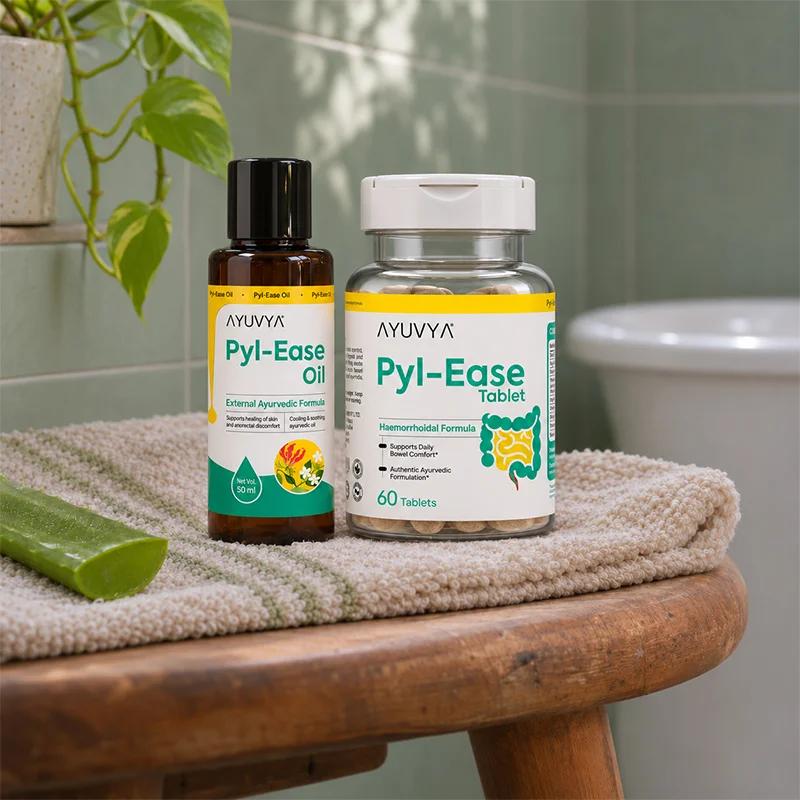
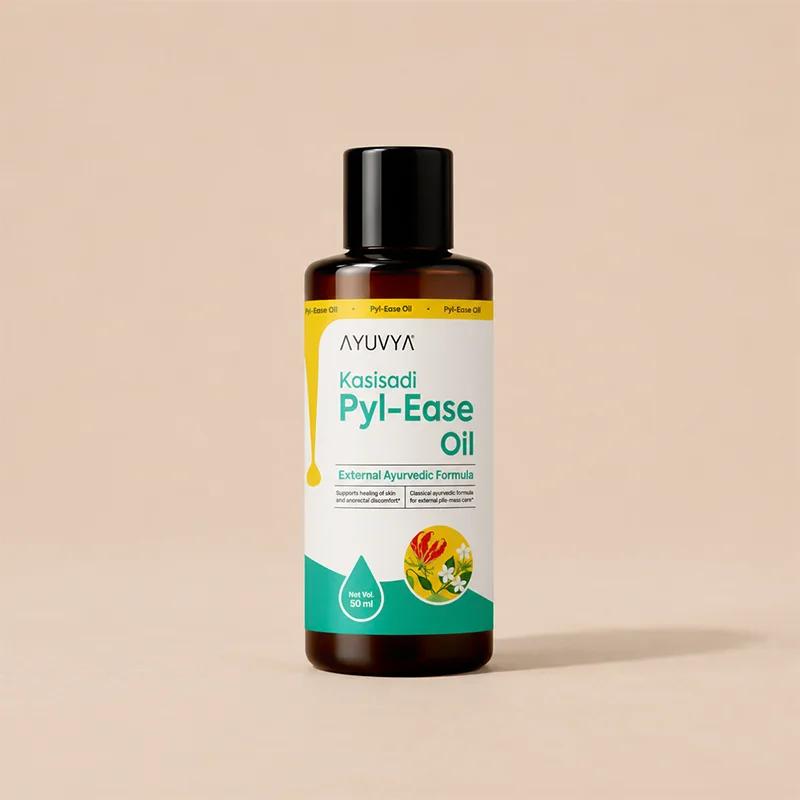
- Pyl-Ease Oil: A Kasisadi-based topical oil positioned for external piles care.
- Jatyadi Oil: A traditional formulation containing ingredients such as Neem, Jati, Tuttha, Lodhra and Haldi.
These products are part of Ayuvya's Piles Care range. They should be used according to their individual product directions. Check suitability with a healthcare professional, particularly if the area is bleeding, irritated or has broken skin.
Ayurvedic Medicine for Piles at Home: 5 Home Care Tips
People looking for ayurvedic medicine for piles at home should also pay attention to everyday habits. Home care can help manage mild symptoms, although it does not replace medical treatment when needed.
1. Eat Fibre-Rich Foods
Fibre helps soften stools and makes bowel movements easier. Include:
- Papaya, apples and pears.
- Green vegetables and leafy greens.
- Oats and whole grains.
- Beans, lentils and other pulses.
Increase fibre gradually to avoid digestive discomfort.
2. Drink Enough Water
Adequate hydration supports normal bowel function and helps dietary fibre work effectively. Drink water regularly throughout the day, adjusting your intake according to your needs and medical advice.
3. Avoid Straining During Bowel Movements
Repeated straining can aggravate piles. Do not ignore the urge to pass stools, and avoid spending unnecessary time sitting on the toilet.
4. Stay Physically Active
Walking and other gentle physical activities can support regular bowel movements. Avoid remaining seated for long periods without breaks.
5. Try Warm Sitz Baths
Sitting in comfortably warm water for around 10–15 minutes may help soothe local discomfort. Avoid water that is too hot, and gently pat the area dry afterwards.
Fibre intake, hydration, avoiding straining and warm baths are recognised home-care measures for haemorrhoid symptoms.
Which Ayurvedic Medicines Does Ayuvya Offer for Piles Care?
At Ayuvya, the Piles Care range brings together traditional Ayurvedic formulations in different product formats. Understanding their intended use helps customers explore the options more carefully.
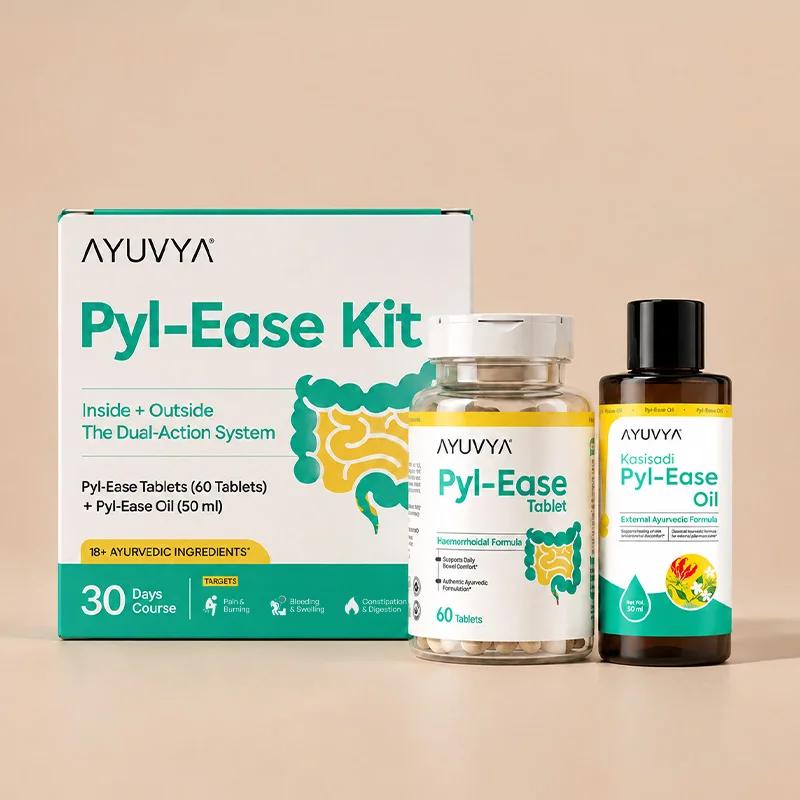
Ayuvya Pyl-Ease Kit
The Pyl-Ease Kit combines Pyl-Ease Tablets with Jatyadi Oil. It brings together an oral formulation and a topical oil in one pack. The range is positioned for Grade 1 and Grade 2 piles.
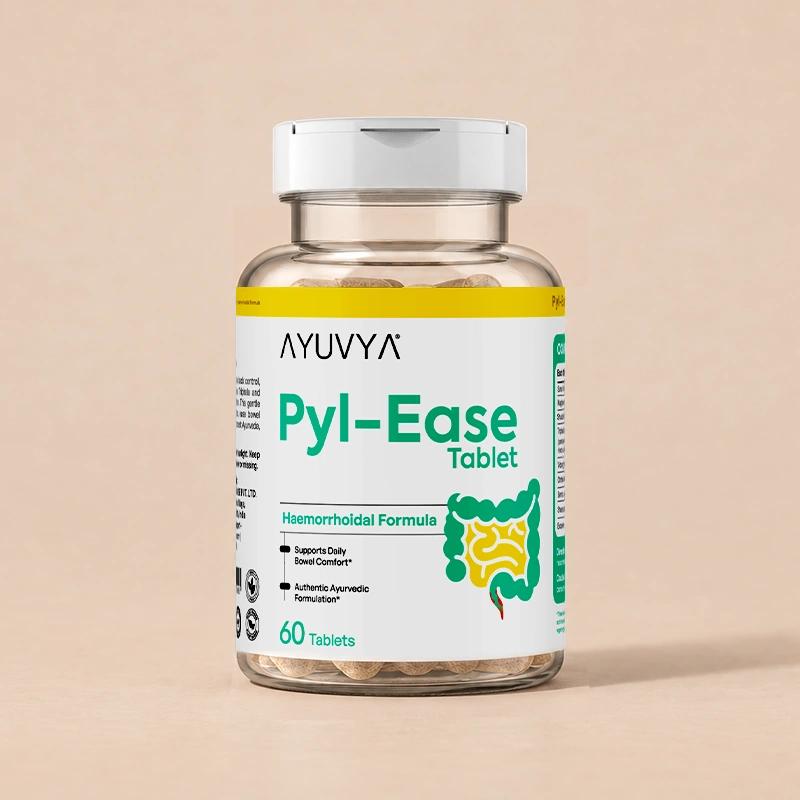
Ayuvya Pyl-Ease Tablets
These tablets contain traditional ingredients, including:
- Nagkesar
- Triphala
- Suran
- Chitrak
The formulation is positioned for internal piles-care and digestive support. Consult a healthcare professional before using oral Ayurvedic products, especially if you take other medicines.
Ayuvya Pyl-Ease Oil and Jatyadi Oil
Both are topical options in Ayuvya's collection.
Pyl-Ease Oil is a Kasisadi formulation, while Jatyadi Oil contains traditional ingredients such as Neem, Jati, Tuttha, Lodhra and Haldi.
Neither should be treated as a guaranteed cure or used beyond its stated directions.
Explore the Ayuvya Piles Care collection to review the available formulations and product information.
Ayurvedic Medicine for Piles Reviews: What Should You Check?
Reading ayurvedic medicine for piles reviews can help you understand other customers' experiences, but reviews should not be the only basis for choosing a product.
Before purchasing, check:
- Verified feedback: Look for reviews from confirmed buyers.
- Ingredient transparency: Make sure the formulation is clearly listed.
- Realistic expectations: Be cautious of claims promising permanent relief or guaranteed results.
- Product instructions: Check the intended use and recommended directions.
- Quality information: Look for clear manufacturing and product details.
Ayuvya displays customer reviews for its Pyl-Ease range, including feedback from verified buyers. These experiences can offer consumer perspectives, but they do not establish clinical effectiveness. Individual results may vary.
When Should You Consult a Doctor for Piles?
Even when exploring whether is ayurvedic medicine safe for piles, recognising when home care is insufficient is essential.
Consult a healthcare professional if you experience:
- Persistent or recurrent rectal bleeding.
- Severe or increasing anal pain.
- A painful lump around the anus.
- Symptoms that do not improve with home care.
- Changes in bowel habits or unexplained discomfort.
Seek prompt medical attention for significant bleeding, dizziness, or severe pain. Rectal bleeding should not automatically be attributed to piles because other digestive conditions can cause it.
Explore Ayurvedic Piles Care with Ayuvya
Choosing an appropriate piles-care routine involves more than selecting a topical product. Understanding the ingredients, maintaining healthy bowel habits, and seeking medical guidance when needed are equally important.
If you are still asking, is ayurvedic medicine safe for piles, make an informed decision by checking product formulations and their intended use.
At Ayuvya, our Pyl-Ease range includes Pyl-Ease Tablets, Pyl-Ease Oil, Jatyadi Oil, and the Pyl-Ease Kit, bringing traditional Ayurvedic formulations into different piles-care formats.
Explore Ayuvya's Ayurvedic Piles Care Range to learn about the ingredients, product details, and usage recommendations. Choose your wellness routine thoughtfully and consult your healthcare professional before starting any new formulation.
Medical disclaimer: This article is intended for educational purposes and does not replace professional medical advice, diagnosis, or treatment. Ayuvya products are not intended to diagnose, treat, cure, or prevent any disease. Consult a qualified healthcare professional before using them, particularly if you have an existing health condition, take medication, are pregnant, or have allergies.